





 Multi-Vendor & Complex SaaS Marketplaces
 Modern Headless & Jamstack Web Development
 High-End Corporate & Specialized Business Websites
 Advanced API, Checkout & Database Troubleshooting
Locked Out of Your VPS? Emergency SSH and Root Password Recovery
Lost SSH access or your root password on a Linux VPS? Diagnose key-only lockouts, firewall bans, and broken sshd config with copy-paste rescue steps—then know when remote recovery with Fixwebnode is safer.

If you cannot log in to your Linux VPS over SSH—wrong root password, lost private key, or a config change that locked everyone out—this guide walks you through safe remote diagnostics and recovery.
Small businesses and site owners in Brisbane and across Australia often hit this after a hurried sshd_config edit, a fail2ban ban, or a key rotation that never finished. Fixwebnode provides direct remote emergency help for SSH access and root password recovery: provider console and rescue-mode work, password reset, and SSH hardening—not a freelance marketplace. Below are the failure modes we see most, DIY steps you can try when you still have console access, and clear signals to book a specialist.
Why SSH lockouts matter on a production VPS
Without SSH you cannot patch, restore backups, rotate certificates, or stop a compromised process. Hosting panels alone rarely replace shell access when the guest OS is the problem. Fast recovery protects uptime for web apps, mail, and databases running on Ubuntu, Debian, AlmaLinux, or similar. Fixwebnode works remotely with your cloud provider’s console or rescue environment so you regain a working root session without flying hardware to a desk in your area.
What usually causes a total SSH lockout on a Linux VPS?
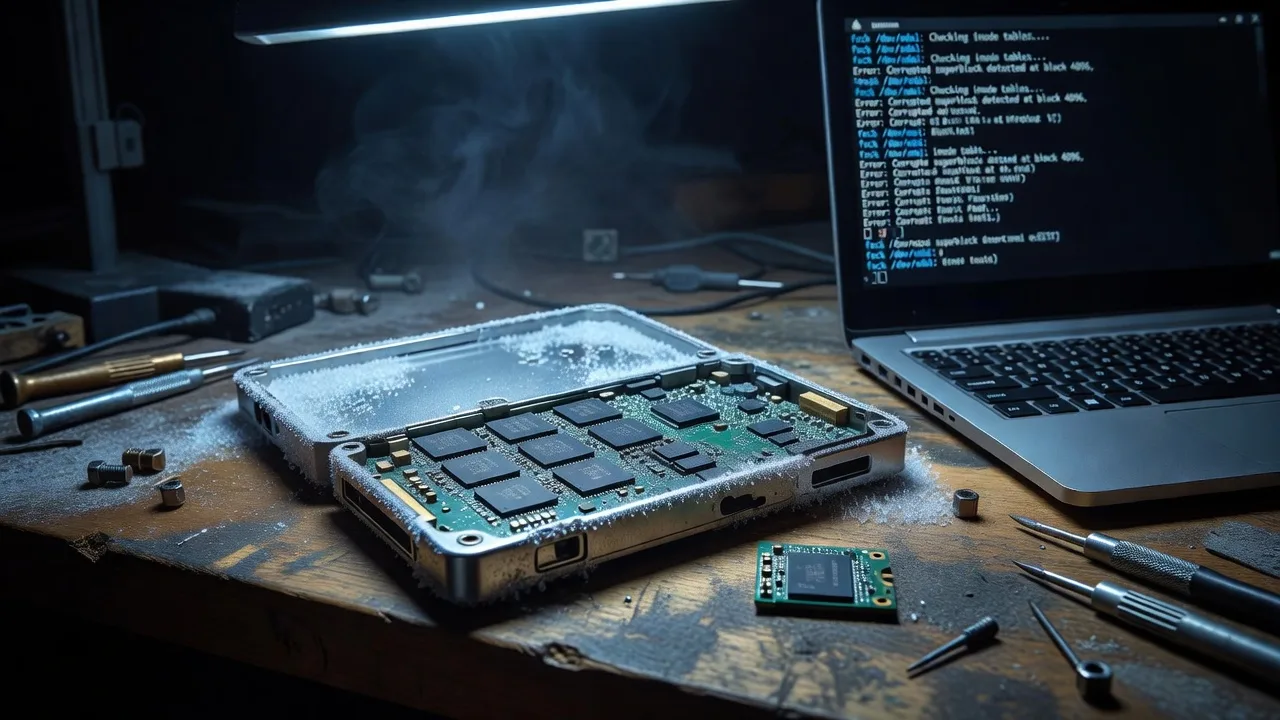
Most lockouts are not “the server is dead.” They are authentication, network filter, or daemon config failures. Typical patterns: password auth disabled after you lost the only private key; ufw or a security group closed port 22; PermitRootLogin or AllowUsers set too tightly; authorized_keys permissions wrong; fail2ban jailing your office IP. Use the table below as a quick triage, then follow the matching runbook.
| Symptom | Quick DIY direction | Call Fixwebnode when |
|---|---|---|
| Permission denied (publickey) | Rescue mount + fix keys/passwd | No console, or disk/LVM unclear |
| Connection timed out / refused | Check security group, ufw, sshd listen | Host unreachable even via provider net tools |
| Login works then drops / config reject | sshd -t in rescue; restore sshd_config | Custom PAM, chroot jails, or unknown edits |
Common issues that lock you out of SSH
1. Lost private key or root password with password login disabled
Symptom: Permission denied (publickey) from every machine; password prompt never appears because PasswordAuthentication no and the only authorized key is gone.
2. Firewall or fail2ban blocking your IP on port 22
Symptom: hang then timeout, or immediate “Connection refused” after many failed logins; other ports or the provider web console still work.
3. Broken sshd_config (root denied, wrong ListenAddress, bad Match blocks)
Symptom: SSH worked until a config change; systemctl status ssh may show failed start, or connections reset after banner.
4. Wrong ownership or modes on ~/.ssh and authorized_keys
Symptom: key auth fails even with the correct key; auth logs show “bad ownership or modes” or “Authentication refused: bad ownership.”
Fix 1 — Root password and SSH key recovery via rescue / console
Use this when you can open the provider’s web console or boot a rescue ISO and mount the root disk. Assumes a typical single-disk Ubuntu/Debian layout; adjust device names after you inspect partitions.
Step 1 — Boot rescue and identify the root filesystem
lsblk -f
fdisk -l
mkdir -p /mnt/root
mount /dev/sda1 /mnt/root
# If separate /boot or LVM, mount those too before chroot
Confirm you see /mnt/root/etc/shadow and /mnt/root/etc/ssh/sshd_config.
Step 2 — Bind mounts and chroot (or reset password without full chroot)
mount --bind /dev /mnt/root/dev
mount --bind /proc /mnt/root/proc
mount --bind /sys /mnt/root/sys
mount --bind /run /mnt/root/run
chroot /mnt/root /bin/bash
passwd root
# Set a strong temporary password; store it in a password manager
Step 3 — Re-enable a safe temporary login path
cp -a /etc/ssh/sshd_config /etc/ssh/sshd_config.bak.$(date +%F)
sed -i 's/^#\?PermitRootLogin.*/PermitRootLogin prohibit-password/' /etc/ssh/sshd_config
sed -i 's/^#\?PasswordAuthentication.*/PasswordAuthentication yes/' /etc/ssh/sshd_config
sshd -t && echo "sshd_config OK"
Prefer key-only long term. For emergency console-only recovery, password auth can be temporary.
Step 4 — Install a fresh authorized key for your admin user
mkdir -p /root/.ssh
chmod 700 /root/.ssh
nano /root/.ssh/authorized_keys
# Paste ONE line: your current ssh-ed25519 or rsa public key
chmod 600 /root/.ssh/authorized_keys
chown -R root:root /root/.ssh
Step 5 — Exit rescue, boot normal disk, verify from your laptop
exit
umount -R /mnt/root
# In provider panel: exit rescue, boot from primary disk
ssh -i ~/.ssh/your_recovery_key root@YOUR_VPS_IP
# Then lock password auth back down:
sudo sed -i 's/^PasswordAuthentication yes/PasswordAuthentication no/' /etc/ssh/sshd_config
sudo sshd -t && sudo systemctl reload ssh || sudo systemctl reload sshd
When to call Fixwebnode: no rescue image, encrypted root, complex LVM/mdadm, or you cannot risk a wrong mount. Remote specialists handle provider-specific rescue flows for Brisbane-hosted and multi-region VPS fleets via SSH access / root password recovery.
Fix 2 — Port 22 blocked by ufw, firewalld, or fail2ban
If the provider console works but SSH from the internet times out, filters are the usual cause.
Step 1 — From console, confirm sshd is listening
ss -tlnp | grep -E ':22|:2222'
systemctl status ssh || systemctl status sshd
journalctl -u ssh -n 50 --no-pager || journalctl -u sshd -n 50 --no-pager
Step 2 — Open the firewall on the guest
# Ubuntu/Debian ufw
sudo ufw status verbose
sudo ufw allow OpenSSH
# or: sudo ufw allow 22/tcp
sudo ufw reload

# RHEL-family firewalld
sudo firewall-cmd --permanent --add-service=ssh
sudo firewall-cmd --reload
Step 3 — Clear a fail2ban jail for your IP
sudo fail2ban-client status
sudo fail2ban-client status sshd
sudo fail2ban-client set sshd unbanip YOUR.OFFICE.IP.HERE
# Temporary widen while you recover:
# sudo fail2ban-client stop sshd
Step 4 — Cloud security group / network ACL
In the provider panel, ensure inbound TCP 22 (or your custom SSH port) allows your current public IP. Corporate NATs change; a stale allow-list looks exactly like a dead host.
Step 5 — Verify from outside
nc -vz YOUR_VPS_IP 22
ssh -v root@YOUR_VPS_IP
Verbose SSH shows whether you reach the banner or die at TCP.
When to call Fixwebnode: nested firewalls, unknown custom ports, or panel security groups you do not control. Geography coverage is listed under all service areas; recovery itself is remote.
Fix 3 — Repair a broken sshd_config safely
Never restart sshd on a live box until sshd -t passes—and keep an active console session open.
Step 1 — Test and locate the bad directive
sudo sshd -t
# Example error: /etc/ssh/sshd_config line 42: Directive 'PermitRootLogin' without value
sudo grep -nE 'PermitRootLogin|PasswordAuthentication|AllowUsers|ListenAddress|Port ' /etc/ssh/sshd_config
Step 2 — Restore a known-good baseline (rescue or console)
sudo cp -a /etc/ssh/sshd_config /etc/ssh/sshd_config.broken
# If package default exists:
sudo apt-get install --reinstall -y openssh-server # Debian/Ubuntu
# or keep broken file and edit minimally:
sudo sed -i 's/^AllowUsers .*/#&/' /etc/ssh/sshd_config
sudo sed -i 's/^PermitRootLogin no/PermitRootLogin prohibit-password/' /etc/ssh/sshd_config
sudo sshd -t
Step 3 — Reload without killing your only session carelessly
sudo systemctl reload ssh || sudo systemctl reload sshd
# New terminal test BEFORE you close the console:
ssh -o BatchMode=yes -o ConnectTimeout=8 root@127.0.0.1 true && echo local_ok
Step 4 — Align ListenAddress with real NICs
ip -br a
# If sshd_config pins an old private IP, comment ListenAddress or set the current one
sudo ss -tlnp | grep sshd
When to call Fixwebnode: Match blocks, certificate auth, or dual-stack binds you did not write. Related Ubuntu/Debian emergency work is documented on the Ubuntu/Debian emergency SSH recovery specialist page (remote delivery applies regardless of city).
Fix 4 — authorized_keys permissions and SELinux/AppArmor side effects
Step 1 — Correct modes (inside the system or chroot)
chmod 700 /root /root/.ssh
chmod 600 /root/.ssh/authorized_keys
chown -R root:root /root/.ssh
# For a sudo user:
chmod 700 /home/deploy /home/deploy/.ssh
chmod 600 /home/deploy/.ssh/authorized_keys
chown -R deploy:deploy /home/deploy/.ssh
Step 2 — Confirm key format (single line, no wrap)
wc -l /root/.ssh/authorized_keys
ssh-keygen -l -f /root/.ssh/authorized_keys
Step 3 — Read the auth log while you retry login
sudo tail -f /var/log/auth.log
# RHEL: sudo tail -f /var/log/secure
Messages about “bad ownership or modes for /root/.ssh” confirm this class of failure.
Step 4 — SELinux contexts if enforcing
getenforce
restorecon -Rv /root/.ssh
# or: chcon -R -t ssh_home_t /root/.ssh
When to call Fixwebnode: mixed home directories, LDAP/sssd, or post-intrusion key injection. If lockout followed a site compromise, pair recovery with incident cleanup such as hacked WordPress disaster recovery emergency response so attackers do not drop new keys after you regain shell.
When DIY is enough vs when to book Fixwebnode
DIY is reasonable when the provider console works, the disk mounts cleanly, you can run sshd -t, and you understand you will re-harden password auth and keys afterward. Keep a second session open, document every change, and snapshot the VPS first if the panel offers it.
Book Fixwebnode when any of these apply: no console access; full-disk encryption; software RAID/LVM you did not build; repeated lockouts after “fixes”; signs of intrusion in authorized_keys or cron; production data you cannot risk with trial mounts; or you need same-session hardening (key-only, non-default port only after firewall rules, fail2ban tuned, root login policy) so the outage does not repeat.
Fixwebnode is the direct specialist for remote emergency Linux SSH and root password recovery—not a bid board. Work is done on your VPS through approved provider tools, with clear hand-back of working credentials and a tightened sshd posture.
Get SSH access back—talk to Fixwebnode
If you are locked out of a VPS and the steps above are blocked by missing console rights, unclear storage layout, or time pressure on a live site, start a recovery conversation now. Describe the exact SSH error, distro, and whether the provider serial/VNC console still works.
Book emergency SSH access and root password recovery with Fixwebnode — remote specialists focused on Linux lockouts for teams that need shell access restored cleanly and securely. Service coverage details live on the service areas page; delivery for this work is remote and digital.
Regain root, verify SSH with a new key, disable temporary password auth, and return to normal operations without guessing at sshd_config under pressure.