






 Multi-Vendor & Complex SaaS Marketplaces
 Modern Headless & Jamstack Web Development
 High-End Corporate & Specialized Business Websites
 Advanced API, Checkout & Database Troubleshooting
Secure WordPress Clinic Booking Fixes for Ipswich Practices
Clinic booking forms failing, double slots, or insecure patient data? Practical DIY checks for WordPress medical booking sites in Ipswich, QLD—plus when remote Fixwebnode support is the safer path.
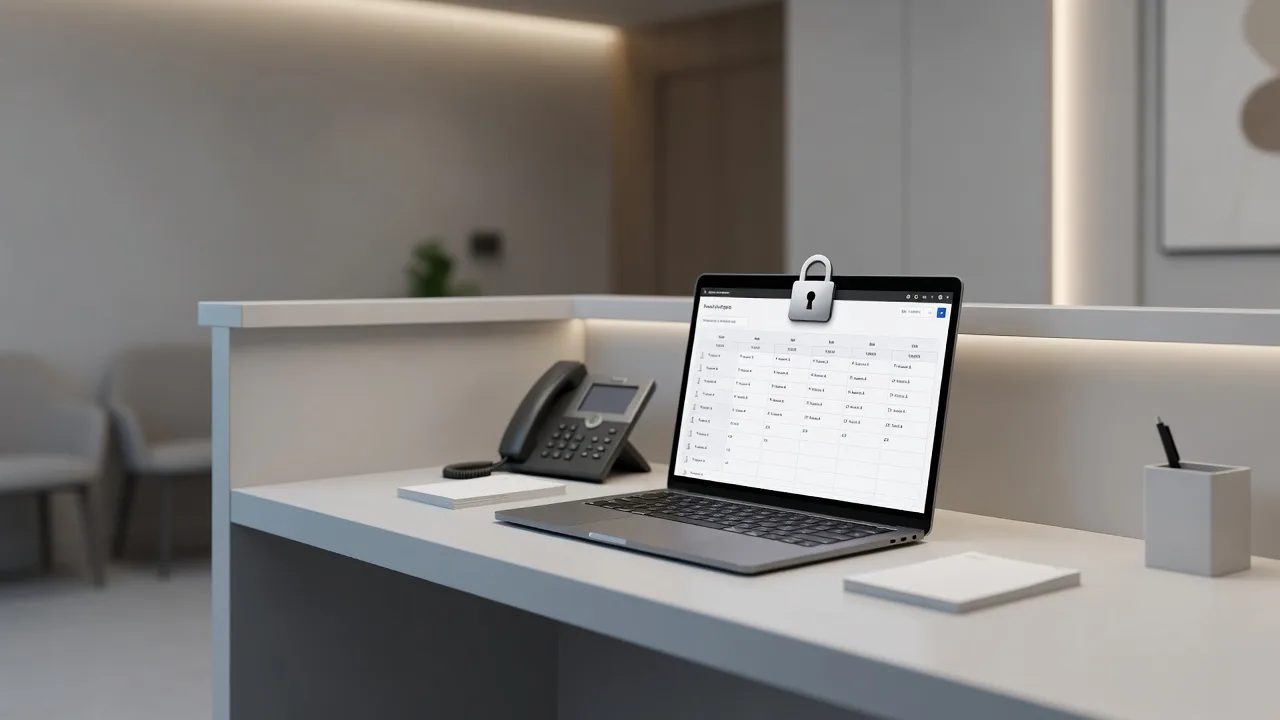
If you run a medical or allied-health clinic site on WordPress and online bookings keep breaking, leaking mixed-content warnings, or double-booking patients, this guide is for you. You will walk through concrete diagnostics, plugin and server checks, and clear steps to harden a secure online booking system without guessing.
Clinic websites in Ipswich, QLD need more than a pretty theme: appointments must stay private, HTTPS must stay clean, and the calendar must not invent phantom slots. Fixwebnode provides direct website support for WordPress medical booking builds—remote triage, hardening, and stabilisation for practice owners who need the booking path working again.
Why secure online booking systems matter for clinic WordPress sites
A medical booking flow collects names, phone numbers, reasons for visit, and sometimes Medicare or referral details. When the form plugin, page cache, SSL certificate, or PHP worker misbehaves, patients see blank calendars, 500 errors after submit, or browser “not secure” banners. That erodes trust and creates admin cleanup work for your reception team.
WordPress clinic builds commonly stack a booking plugin (Amelia, Bookly, Simply Schedule Appointments, or custom CPT calendars), a form layer, email delivery, and sometimes a payment gateway. Any weak link—expired certificate, aggressive cache on dynamic endpoints, wrong timezone, or a plugin conflict after an update—shows up as missed appointments or insecure pages. Remote diagnostics still work well for these stacks because logs, SSL status, and plugin state are visible without a site visit.
Why does my WordPress clinic booking form fail or show insecure warnings?
Most clinic booking failures come from three places: broken HTTPS (mixed content or expired certificates), booking plugin conflicts with cache or security plugins, and email or webhook delivery that never confirms the appointment. Fix the transport and plugin stack first; only then rebuild the calendar rules.
| Symptom | Quick check | When to call Fixwebnode |
|---|---|---|
| Padlock missing / mixed content on booking page | Force HTTPS, scan for http:// assets | Certificate chain or CDN origin still broken after renew |
| Double bookings or wrong slot times | WP timezone, plugin slot buffer, object cache flush | Custom availability rules or multi-practitioner sync fail |
| Form submits then 500 / blank thank-you | PHP error log, disable cache on booking URLs | Fatal plugin conflict or server PHP-FPM crash loop |
| No confirmation email to patient or clinic | WP Mail logging, SPF/DKIM, SMTP plugin test | Transactional mail still dropped after SMTP hardening |
Common issues with medical clinic booking websites
These problems show up repeatedly on WordPress clinic sites that take online appointments. Each has a different root cause.
- Mixed content and broken padlock on the booking page — Browser shows “Not secure” or blocks scripts; calendar widgets fail to load after HTTPS was “turned on.”
- Double bookings and timezone drift — Two patients get the same slot, or evening appointments appear an hour off after daylight saving or a plugin update.
- Booking submit ends in HTTP 500 or a white screen — Patient clicks Confirm; page dies. Often PHP memory, a security plugin blocking AJAX, or full-page cache serving a stale nonce.
- Confirmation emails never arrive — Slot is held in the admin calendar but neither patient nor clinic receives mail, so reception assumes the booking failed.
Issue 1 — Mixed content and insecure booking pages
After moving a clinic site to HTTPS, leftover http:// scripts, CSS, or iframe embeds from the booking vendor break the padlock. Modern browsers may refuse to run the calendar JavaScript.
Step 1 — Confirm certificate and HTTPS redirect
curl -sI https://YOUR-CLINIC-DOMAIN | head -n 20
echo | openssl s_client -servername YOUR-CLINIC-DOMAIN -connect YOUR-CLINIC-DOMAIN:443 2>/dev/null | openssl x509 -noout -dates -subject
You want HTTP/2 200 (or 301 only from bare HTTP), a valid Not After date, and the correct clinic hostname on the certificate.
Step 2 — Force WordPress onto HTTPS
In Settings → General, set both WordPress Address and Site Address to https://. If you use WP-CLI on the host:
wp option update home 'https://YOUR-CLINIC-DOMAIN'
wp option update siteurl 'https://YOUR-CLINIC-DOMAIN'
wp search-replace 'http://YOUR-CLINIC-DOMAIN' 'https://YOUR-CLINIC-DOMAIN' --all-tables --precise --report-change-only
Step 3 — Find mixed assets on the booking URL
curl -sL https://YOUR-CLINIC-DOMAIN/book/ | grep -oiE 'src=["'\'']http://[^"'\'']+|href=["'\'']http://[^"'\'']+' | headReplace any remaining hard-coded HTTP links in the theme, Elementor/HTML widgets, or booking shortcode settings. Purge CDN and page cache after changes.
Step 4 — Verify in a private browser window
Open the booking page, confirm the padlock, submit a test appointment to a dummy patient, then delete the test row in the booking plugin.
When the certificate chain fails only on some devices, the CDN origin still serves HTTP, or search-replace is too risky on a live patient database, book remote help via Fixwebnode rather than forcing bulk DB edits yourself.
Issue 2 — Double bookings and wrong appointment times
Reception sees two confirmed patients on one chair time, or the public calendar is shifted versus the practice management diary. Root causes are usually WordPress timezone, booking plugin buffer rules, and object/page cache holding old availability JSON.
Step 1 — Align WordPress and server time
wp option get timezone_string
wp option get gmt_offset
date; timedatectl status 2>/dev/null || cat /etc/timezone 2>/dev/null
Set Settings → General → Timezone to Australia/Brisbane (Queensland does not observe daylight saving). Avoid a manual UTC offset if a named zone is available.
Step 2 — Review booking plugin slot rules
In your booking plugin, check: minimum notice before appointment, slot length, buffer between appointments, multi-service duration stacking, and whether practitioners share one calendar resource. Disable “overlapping allowed” style options unless your clinical workflow truly needs them.
Step 3 — Exclude booking endpoints from full-page cache
In your cache plugin or reverse proxy, bypass cache for URLs and AJAX paths used by the booker (examples vary by plugin: /book/, admin-ajax.php actions, REST routes under /wp-json/). Then flush:
wp cache flush
# If Redis object cache is present:
redis-cli ping && redis-cli FLUSHDB
Only flush the DB that WordPress actually uses; confirm with your host if unsure.
Step 4 — Run a controlled double-book test
Open two private windows, select the same future slot a few seconds apart, and confirm only one succeeds. Check the plugin’s appointment list and any Google Calendar sync queue.
Call Fixwebnode when you run multi-location or multi-practitioner rules, custom availability hooks, or calendar sync that still collides after timezone and cache fixes—those need structured rule redesign, not more cache purges.
Issue 3 — Booking submit returns 500 or a white screen
The calendar renders, but Confirm triggers a server error. Typical causes: PHP fatals after a plugin update, security plugins blocking booking AJAX, exhausted memory, or nonce failures from cached HTML.
Step 1 — Read the current PHP and web error log
# Paths vary by host; common patterns:
tail -n 80 /var/log/nginx/error.log
tail -n 80 /var/log/apache2/error.log
tail -n 80 ~/logs/error.log 2>/dev/null
wp config get WP_DEBUG
wp config get WP_DEBUG_LOG
Enable logging temporarily if needed (remove after triage):
wp config set WP_DEBUG true --raw
wp config set WP_DEBUG_LOG true --raw
wp config set WP_DEBUG_DISPLAY false --raw
Reproduce one failed booking, then inspect wp-content/debug.log for the plugin file named in the fatal.
Step 2 — Isolate plugin conflict safely
In a maintenance window, deactivate non-essential plugins except the booking plugin, form/SMTP stack, and security baseline. Retest. Reactivate in small batches. Prefer staging if patient data is live.
wp plugin list --status=active
wp plugin deactivate plugin-slug-here
# retest booking AJAX, then:
wp plugin activate plugin-slug-here
Step 3 — Raise PHP limits only if logs show exhaustion
php -i | grep -E 'memory_limit|max_execution_time'
# On many panels, adjust via multiPHP INI or pool config, then reload:
sudo systemctl reload php8.2-fpm 2>/dev/null || sudo service php-fpm reload 2>/dev/null
Match the PHP version your host actually runs for the site.
Step 4 — Whitelist booking AJAX in security tools
If Wordfence, a WAF, or a firewall plugin logs blocked admin-ajax.php or REST hits during submit, add a narrow allow for those booking actions—do not disable the entire firewall.
Escalate to Fixwebnode when fatals point at custom theme code, ionCube-encoded plugins, or PHP-FPM crash loops that return after reload. Those need controlled remote recovery rather than repeated deactivates on a live clinic front desk.
Issue 4 — Appointment held but confirmation email never arrives
The booking plugin stores the appointment, yet patient and clinic inboxes stay empty. Hosts often block raw wp_mail; SPF/DKIM may not match the From domain used by the clinic.
Step 1 — Prove whether WordPress is queuing mail
Install or enable a mail logger temporarily, send a test from the booking plugin’s test tool, and note success versus failure at the WordPress layer.
wp plugin install wp-mail-logging --activate
# Trigger a test booking or:
wp eval 'var_dump( wp_mail("you@YOUR-CLINIC-DOMAIN", "Clinic mail test", "Booking SMTP check") );'
Step 2 — Move transactional mail to authenticated SMTP
Configure a proper SMTP plugin (clinic Google Workspace, Microsoft 365, or transactional provider). Use the clinic’s domain as From, not a no-reply on a free mailbox. Send another test booking.
Step 3 — Check DNS auth records
dig TXT YOUR-CLINIC-DOMAIN +short
dig TXT default._domainkey.YOUR-CLINIC-DOMAIN +short
dig TXT _dmarc.YOUR-CLINIC-DOMAIN +short
SPF should allow your real sending service; DKIM should validate; DMARC should not quarantine clinic mail you still need.
Step 4 — Confirm clinic-side filters
Check spam, quarantine, and rules on the reception inbox. Add the SMTP From address to allow lists.
If mail still vanishes after SMTP and DNS are correct—especially with multi-recipient clinic notifications or SMS gateways—hand the stack to Fixwebnode for end-to-end delivery tracing.
When DIY is enough vs when to book Fixwebnode
DIY is reasonable when you can renew SSL, align Australia/Brisbane timezone, exclude booking URLs from cache, read a clear PHP fatal, or attach SMTP and prove wp_mail success. Those steps restore many Ipswich clinic booking pages without downtime beyond a short maintenance window.
Book a specialist when patient-identifiable data is involved in a messy database search-replace, when multi-practitioner rules still double-book, when the WAF and booking AJAX cannot be reconciled, or when the site is down during clinic hours and you need remote recovery. Fixwebnode works as a direct provider for WordPress clinic booking systems—not a freelance marketplace—and can take over logs, plugin isolation, and hardening over a remote session.
Geography-wise, support is delivered remotely for practices in your area and across listed regions on the service areas page. Related WordPress build and retainer work is documented under WordPress Developer custom builds and WordPress maintenance and support retainer pages if you need ongoing patch cadence after the booking path is stable.
Talk with Fixwebnode about your clinic booking site
If your medical clinic WordPress site still drops bookings, shows insecure warnings, or confuses reception with phantom slots, bring the symptoms, plugin names, and a non-production test slot time to a conversation. Remote website support can verify SSL, booking cache rules, PHP errors, and mail delivery in one structured pass.
Start here: Fixwebnode website support. Share what patients see on the booking page and what appears in your error log—we will outline the safest next fix path for your clinic’s secure online booking system.