






 Multi-Vendor & Complex SaaS Marketplaces
 Modern Headless & Jamstack Web Development
 High-End Corporate & Specialized Business Websites
 Advanced API, Checkout & Database Troubleshooting
Fix E-Commerce SSL Handshake & Mixed Content on Checkout
Checkout blocked by SSL handshake errors or mixed-content warnings? Learn the distinct causes, DIY browser and server checks, and when Fixwebnode should take over so payments stay secure.
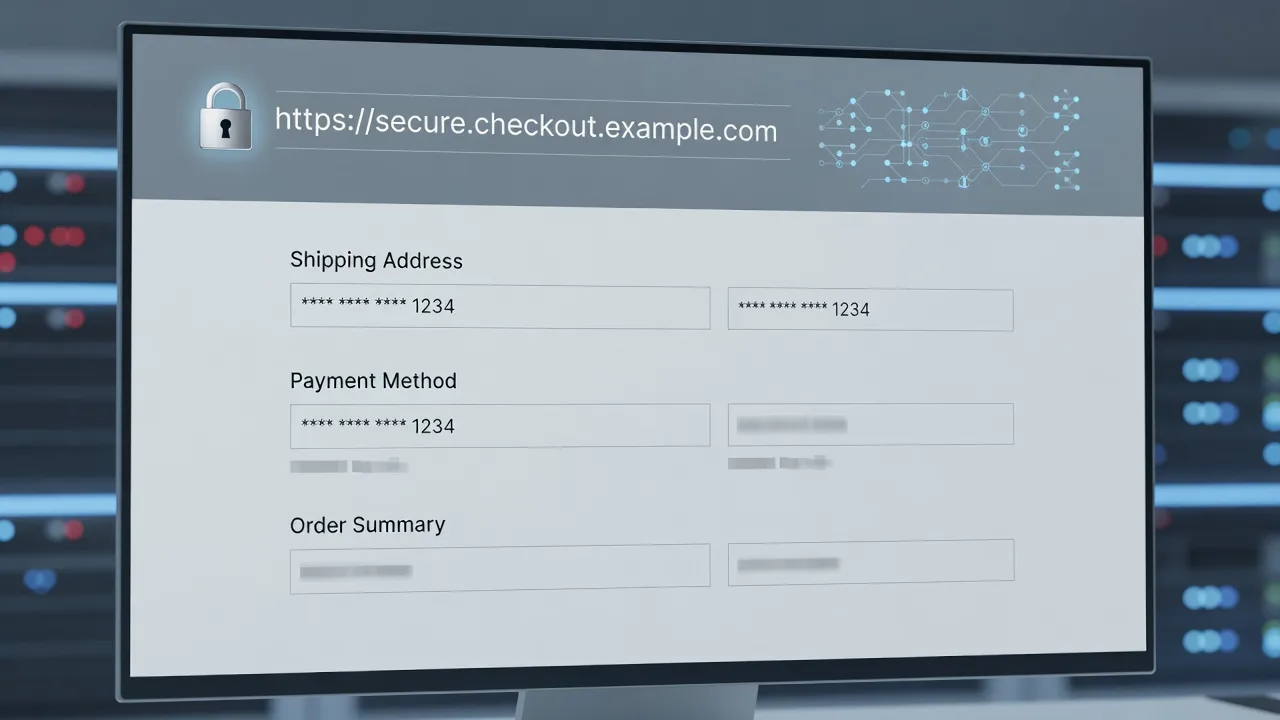
If shoppers hit a padlock warning, a failed TLS handshake, or a browser blocking “insecure content” on your checkout page, sales stop cold—this guide walks small-business owners through the real fixes.
Broken SSL on cart and payment pages is not a cosmetic issue. Modern browsers refuse mixed HTTP assets on HTTPS checkouts, payment gateways abort handshakes when the certificate chain or TLS version is wrong, and customers abandon carts the moment Chrome or Safari flags the page. This practical runbook stays strictly on fixing e-commerce SSL handshake and mixed content warnings on checkout pages: unique failure modes, numbered DIY steps you can run safely, verification commands, and clear points to book a specialist. Fixwebnode helps store owners diagnose and harden checkout TLS without marketplace noise—just direct specialist work on the stack you already run.
Why checkout SSL handshake and mixed content failures matter
Checkout is the highest-trust moment on your site. A single active mixed-content script, an incomplete certificate chain, or a payment iframe still pointed at HTTP will break the secure context. That means refused card forms, PCI-adjacent risk, and support tickets you cannot close with a theme tweak. Whether you sell from a regional storefront or ship nationally, the symptoms look the same in DevTools: red security console errors, ERR_SSL_VERSION_OR_CIPHER_MISMATCH, NET::ERR_CERT_COMMON_NAME_INVALID, or “This request has been blocked; the content must be served over HTTPS.”
Fixwebnode works across the areas listed on our service areas page, pairing remote server checks with the same discipline you would expect from an on-site sysadmin. The sections below isolate four distinct root causes so you do not apply the wrong fix.
Common issues on e-commerce checkout pages
These problems are not interchangeable. Each has different symptoms, logs, and repair paths.
- Active mixed content on cart/checkout — HTTPS page loads scripts, styles, images, or XHR calls over plain HTTP; browsers strip or block them and the pay button never initializes.
- Incomplete certificate chain / intermediate missing — Desktop browsers may still show a padlock via cached intermediates, but mobile clients and payment gateway callbacks fail the handshake with chain errors.
- TLS version or cipher suite mismatch with the gateway — Your origin still offers TLS 1.0/1.1 or weak ciphers; Stripe, PayPal, Adyen, or bank 3-D Secure endpoints refuse the connection.
- Hostname / SAN mismatch on checkout subdomain — Certificate covers
www.example.combut checkout lives onpay.example.comor a CDN edge name; handshake fails with name mismatch before any HTML loads.
Issue 1 — Active mixed content blocking checkout scripts
Symptoms: Console shows Mixed Content: The page at 'https://…/checkout' was loaded over HTTPS, but requested an insecure script/image/xhr. Payment widgets stay blank; some themes still render but card fields never mount.
Step 1 — Confirm the secure context in the browser
- Open checkout in Chrome or Edge.
- Press F12 → Console and Network.
- Filter for failed requests and note every
http://URL on anhttps://document.
Step 2 — Hunt hard-coded HTTP in the storefront
On a typical Linux host (Ubuntu/Debian WordPress or Magento box), search the web root and database-driven options for leftover HTTP asset URLs:
cd /var/www/html
sudo grep -RIn --exclude-dir=node_modules --exclude-dir=.git 'http://' wp-content/themes wp-content/plugins 2>/dev/null | head -n 50
wp option get siteurl
wp option get home
wp search-replace 'http://www.example.com' 'https://www.example.com' --all-tables --dry-run
Replace www.example.com with your real hostname. Review the dry-run list before removing --dry-run.
Step 3 — Force HTTPS at the application and reverse-proxy layers
# Nginx: redirect and upgrade insecure requests
sudo nano /etc/nginx/sites-available/store
# inside server { listen 443 ssl; ... }
# add:
add_header Content-Security-Policy "upgrade-insecure-requests" always;

sudo nginx -t && sudo systemctl reload nginx
For Apache:
sudo a2enmod headers ssl rewrite
sudo nano /etc/apache2/sites-available/store-le-ssl.conf
# Header always set Content-Security-Policy "upgrade-insecure-requests"
sudo apache2ctl configtest && sudo systemctl reload apache2
Step 4 — Fix third-party widgets
- Update payment, chat, and analytics snippets so every
srcand API base URL useshttps://. - In Magento, re-check Base URLs (Secure) and uncheck “Use HTTP for unsecure base” if still present.
- Purge CDN and full-page cache after URL rewrites.
Step 5 — Verify
curl -sI https://www.example.com/checkout | head -n 20
# In browser: no mixed-content errors; payment iframe loads
When to call Fixwebnode: If mixed URLs are injected by a page builder, minified bundles you cannot rebuild, or a headless storefront with environment variables split across CI, book a specialist rather than shipping half-rewritten assets.
Issue 2 — Incomplete certificate chain breaking mobile and gateway callbacks
Symptoms: Desktop Chrome shows OK; Android WebView, older iOS, or the payment provider’s webhook/IPN reports certificate verify failed. SSL Labs notes “Chain issues: Incomplete.”
Step 1 — Inspect what the server actually sends
echo | openssl s_client -connect www.example.com:443 -servername www.example.com -showcerts 2>/dev/null | openssl storeutl -noout -text -certs /dev/stdin 2>/dev/null | head
echo | openssl s_client -connect www.example.com:443 -servername www.example.com 2>/dev/null | grep -E 'Verify return code|depth='
A healthy leaf should verify with return code 0 and include intermediates before the root.
Step 2 — Install the full chain (Let’s Encrypt example)
sudo certbot certificates
# Prefer fullchain.pem, not cert.pem alone
sudo grep -n ssl_certificate /etc/nginx/sites-enabled/*
# Nginx should point to:
# ssl_certificate /etc/letsencrypt/live/www.example.com/fullchain.pem;
# ssl_certificate_key /etc/letsencrypt/live/www.example.com/privkey.pem;

sudo nginx -t && sudo systemctl reload nginx
Apache equivalent uses SSLCertificateFile for the leaf and SSLCertificateChainFile (or a combined full chain) for intermediates—never serve only the leaf.
Step 3 — Confirm chain order
openssl crl2pkcs7 -nocrl -certfile /etc/letsencrypt/live/www.example.com/fullchain.pem 2>/dev/null | openssl pkcs7 -print_certs -noout
curl -sI https://www.example.com/checkout | grep -i strict-transport
Step 4 — Re-test payment callbacks
- Trigger a sandbox purchase.
- Watch gateway dashboard for TLS errors on notify URLs.
- Re-run SSL Labs or
openssl s_clientfrom a clean VPS to avoid local trust-store bias.
When to call Fixwebnode: Multi-node load balancers, AWS ACM + nginx double termination, or custom intermediates from a commercial CA often need coordinated reloads. That is specialist territory—especially if checkout shares a cert with other hostnames.
Issue 3 — TLS version / cipher mismatch with payment gateways
Symptoms: Browser may load the shop, but the gateway iframe or server-to-server API call fails with handshake errors, sslv3 alert handshake failure, or gateway docs requiring TLS 1.2+ only.
Step 1 — See what protocols your origin offers
nmap --script ssl-enum-ciphers -p 443 www.example.com
echo | openssl s_client -connect www.example.com:443 -tls1_1 2>&1 | tail -n 5
echo | openssl s_client -connect www.example.com:443 -tls1_2 2>&1 | tail -n 5
echo | openssl s_client -connect www.example.com:443 -tls1_3 2>&1 | tail -n 5
TLS 1.0/1.1 should fail closed; 1.2 and ideally 1.3 should succeed.
Step 2 — Harden Nginx TLS
sudo nano /etc/nginx/snippets/ssl-params.confssl_protocols TLSv1.2 TLSv1.3;
ssl_prefer_server_ciphers off;
ssl_ciphers HIGH:!aNULL:!MD5:!3DES;
ssl_session_cache shared:SSL:10m;
ssl_session_timeout 1d;
ssl_stapling on;
ssl_stapling_verify on;sudo nginx -t && sudo systemctl reload nginxStep 3 — Harden Apache TLS
sudo nano /etc/apache2/mods-available/ssl.conf
# SSLProtocol all -SSLv3 -TLSv1 -TLSv1.1
# SSLCipherSuite HIGH:!aNULL:!MD5:!3DES
sudo systemctl reload apache2
Step 4 — Align PHP / application outbound TLS (server-side API calls to gateways)
php -i | grep -E 'OpenSSL|curl.cainfo|openssl.cafile'
# Ensure CA bundle present
sudo apt-get update && sudo apt-get install -y ca-certificates
php -r 'echo file_get_contents("https://api.stripe.com/healthcheck");' 2>&1 | head
(Swap the health URL for your gateway’s documented endpoint.)
Step 5 — Verify
curl -v --tlsv1.2 https://www.example.com/checkout -o /dev/null
nmap --script ssl-enum-ciphers -p 443 www.example.com | grep -E 'TLSv|cipher'
When to call Fixwebnode: If a WAF, old load balancer appliance, or shared hosting panel still forces legacy ciphers you cannot edit, stop DIY and escalate. Related stack work—such as clean package and runtime installs—pairs naturally with specialists like the team behind Software Installation Experts in Kentucky when the OS TLS libraries themselves are outdated.
Issue 4 — Certificate hostname / SAN mismatch on checkout hosts
Symptoms: Exact error NET::ERR_CERT_COMMON_NAME_INVALID or openssl “hostname mismatch” when opening https://checkout.example.com or a regional CDN URL. The main shop may be fine; only the payment hostname fails.
Step 1 — Compare DNS names to certificate SANs
dig +short checkout.example.com A
echo | openssl s_client -connect checkout.example.com:443 -servername checkout.example.com 2>/dev/null | openssl x509 -noout -subject -ext subjectAltName
Step 2 — Re-issue or expand the certificate
sudo certbot certonly --nginx -d www.example.com -d example.com -d checkout.example.com
# or webroot mode if nginx plugin is unavailable:
# sudo certbot certonly --webroot -w /var/www/html -d www.example.com -d checkout.example.com
sudo nginx -t && sudo systemctl reload nginx
Step 3 — Align CDN / reverse-proxy host headers
- Ensure the edge certificate includes every public hostname customers type.
- Forward the correct
Host/ SNI to origin so origin certs still match. - Disable “Flexible SSL” modes that terminate HTTPS at the CDN and speak HTTP to origin—those recreate mixed content and break gateway trust.
Step 4 — Verify end-to-end
curl -sI https://checkout.example.com/ | head -n 15
echo | openssl s_client -connect checkout.example.com:443 -servername checkout.example.com 2>/dev/null | grep 'Verify return code'
Expect return code 0 and a 200/302 from the checkout app—not a certificate interstitial.
When to call Fixwebnode: Multi-brand SANs, wildcard edge cases, or multilingual storefronts that add locale subdomains (and new hostnames) benefit from coordinated DNS + cert + app URL work. Stores expanding language coverage alongside checkout hardening often combine TLS repair with structured catalog work such as WPML Multilingual WordPress Setup for Coburg E-Commerce Growth so every locale URL stays on a valid certificate.
When DIY is enough vs when to book Fixwebnode
DIY is enough when: you control the VPS or panel, can edit nginx/Apache safely, mixed content is a short list of theme URLs, and openssl s_client already shows a clean chain after you point the vhost at fullchain.pem. Always snapshot or back up configs before reloads, and re-test a sandbox payment after each change.
Book Fixwebnode when:
- Handshake failures only appear for some gateways, regions, or mobile carriers.
- Certificates terminate on a CDN, load balancer, and origin simultaneously and one layer is wrong.
- Checkout shares infrastructure with staging hostnames that keep poisoning HSTS or cookie Secure flags.
- You need a production change window with rollback, not trial-and-error on a live pay page.
Homeowners running a side shop and small businesses with lean IT both hit the same wall: browsers and banks do not grade on effort. If the padlock is wrong at payment time, escalate before the next campaign spike.
Book a checkout SSL conversation with Fixwebnode
You now have four distinct failure modes—active mixed content, incomplete chains, TLS/cipher mismatch, and hostname SAN errors—each with copy-pasteable checks and reloads. Run the DIY steps on a staging clone first, verify with openssl and a real sandbox purchase, then harden production.
If you want a specialist to own the diagnosis, certificate chain, reverse-proxy TLS policy, and post-fix payment walkthrough, start a conversation with Fixwebnode. Bring your checkout URL, hosting type, and any gateway error codes; we will keep the scope on securing the payment path so customers can complete orders without security interstitial drama.