





 Multi-Vendor & Complex SaaS Marketplaces
 Modern Headless & Jamstack Web Development
 High-End Corporate & Specialized Business Websites
 Advanced API, Checkout & Database Troubleshooting
CSF Firewall Setup: Secure Canberra Web Servers Step by Step
Lock down web servers with CSF without locking out your team. Diagnose blocked IPs, broken ports, and LFD false positives—then know when remote Fixwebnode help is the safer path.
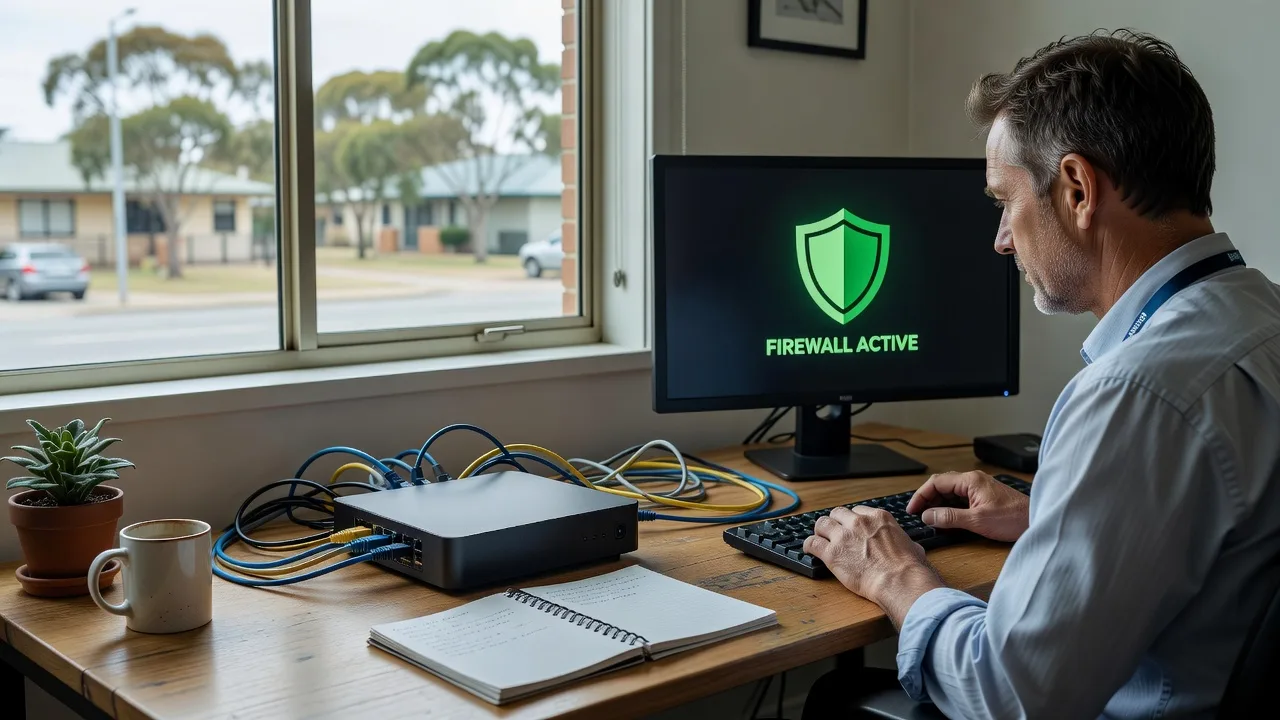
If your Canberra tech firm runs cPanel, WHM, or a bare Linux web stack, a mis-tuned CSF (ConfigServer Security & Firewall) can lock out staff, drop customer traffic, or leave SSH and HTTPS half-open. This guide walks through the failure modes we see most often on production hosts, the exact checks you can run over SSH, and when to hand the box to a specialist instead of guessing at iptables rules.
Fixwebnode provides direct remote server support for CSF hardening, allowlist recovery, and post-incident review—no marketplace bidding, just a specialist on your firewall policy. We work with teams across your area and further afield via secure remote access; see all service areas for coverage context.
Why CSF configuration matters for web server assets
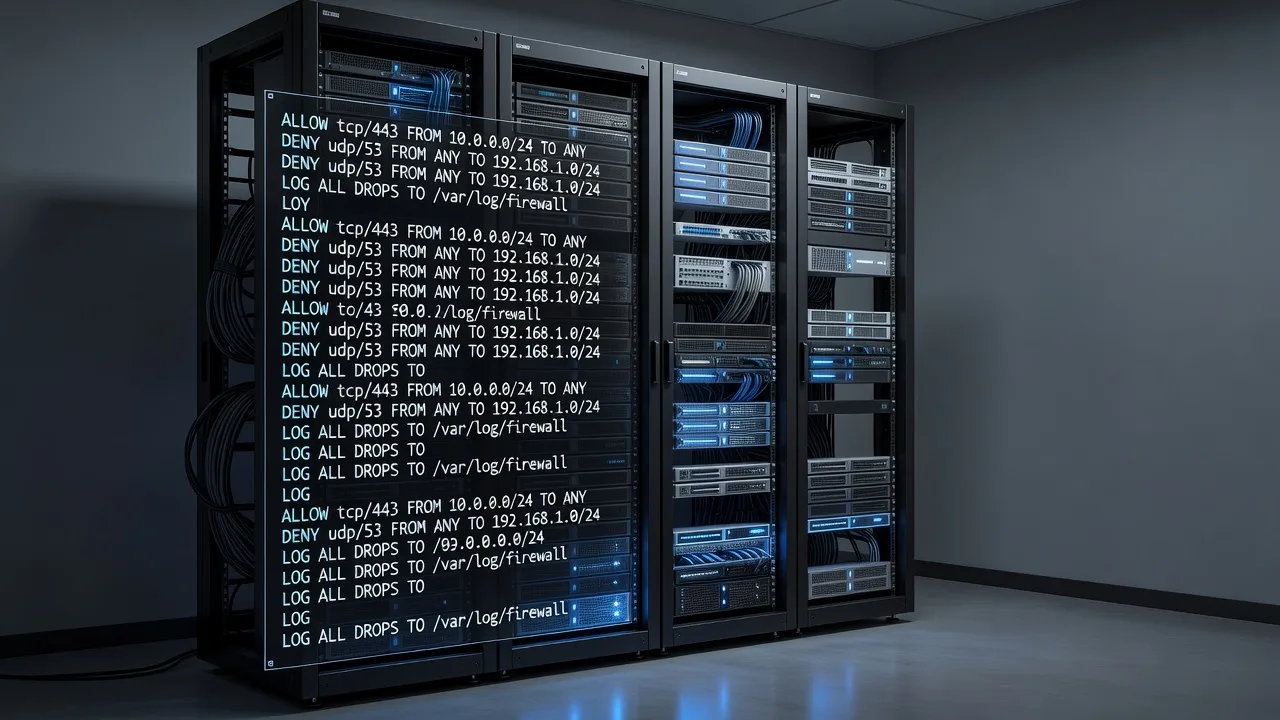
CSF sits in front of Apache, Nginx, LiteSpeed, mail, and SSH. On a busy site it is easy to confuse “the site is down” with “CSF dropped the SYN packets.” Canberra firms often share office egress IPs, use CI runners, and allow agency partners—any of those can trip LFD (Login Failure Daemon) and land in csf.deny. A clean policy keeps public ports tight, keeps your people in, and leaves an audit trail in /var/log/lfd.log.
Before you change anything, take a snapshot or confirm you have console/VNC access in case you block your own SSH session. Work as root or with full sudo, and prefer temporary allows while you test.
Why is my site reachable but SSH and admin panels blocked after enabling CSF?
CSF is usually doing its job: LFD banned the IP after failed logins, or TCP_IN never included the port you need. Check whether your public IP is in csf.deny, confirm the port is listed in TCP_IN/TCP6_IN, then reallow the IP and reload CSF before opening broader holes.
| Symptom | Quick check | Call Fixwebnode when |
|---|---|---|
| Office IP locked out of WHM/SSH | csf -g YOUR.IP then temporary allow | Recurring bans or no console fallback |
| HTTPS works, mail/API ports fail | Compare TCP_IN to listening sockets | Complex NAT, Docker, or multi-node setups |
| CSF/LFD will not start | iptables/nft errors in lfd.log | Kernel/module clashes or panel integration breaks |
Common CSF issues on production web servers
These problems look different in logs and need different fixes. Do not treat them as one “restart firewall” event.
- Own office or CI IP permanently denied — Staff suddenly need VPN or mobile tether; WHM shows “access denied”;
csf -glists the IP in csf.deny with an LFD reason (SSH, SMTP AUTH, xmlrpc, cPanel). - Public site up, application ports closed — Browsers load static pages on 443, but Node, custom APIs, Redis admin, or submission endpoints on alternate ports time out from the internet while working on localhost.
- CSF or LFD fails to start after an OS or panel update —
csf -rerrors, empty iptables chains you expected, or systemd shows csf/lfd failed; often Perl dependency, nftables vs iptables backend, or conflicting firewalld/ufw still enabled. - Aggressive CONNLIMIT/PORTFLOOD breaking legitimate bursts — Checkout spikes, health checks, or marketing campaigns trigger short bans; clients see intermittent 403/timeouts while you see dense LFD email.
Fix 1 — Recover a blocked office, agency, or CI IP
Root cause is almost always LFD auto-deny after repeated auth failures or probe patterns, not a total CSF crash. DIY is safe if you still have another allowlisted path or provider console.
Step 1 — Confirm your egress IP and whether CSF knows it
curl -4 -s https://ifconfig.me
csf -g $(curl -4 -s https://ifconfig.me)
If the lookup shows the address in DENY or a temporary block, continue. Note the matching rule text for later tuning (SSH, POP3, etc.).
Step 2 — Remove the deny and add a permanent allow (then reload)
csf -dr 203.0.113.40
csf -a 203.0.113.40 "Canberra office egress"
csf -r
Replace the sample IP with yours. -dr deletes from deny; -a writes csf.allow. Avoid broad 0.0.0.0/0 allows.
Step 3 — Stop repeat bans on the same service
grep -E 'LF_|HF_|CT_' /etc/csf/csf.conf | head -n 50
tail -n 100 /var/log/lfd.log
Raise thresholds only for the noisy service (for example LF_SSHD) after you fix weak passwords and disable password auth where possible. Keep LF_TRIGGER sensible; do not disable LFD entirely on a public host.
Step 4 — Verify from outside
csf -g 203.0.113.40
ss -tlnp | egrep ':(22|2083|2087|443)\s'
SSH and panel ports should accept the allowlisted IP. If bans return within minutes, rotate credentials and check for compromised bots still hammering login URLs.
Book Fixwebnode when you lack console access, bans rotate across a dynamic ISP pool, or you need a structured allowlist for agencies and pipelines without weakening global LF_ rules.
Fix 2 — Open only the ports your web stack actually needs
Symptom: curl to https://yoursite works, but a service on 3000, 8080, 8443, or a mail submission port never connects from the public internet. CSF TCP_IN/TCP6_IN is the gate—not the application bind address alone.
Step 1 — See what is listening versus what CSF allows
ss -tulpn
grep -E '^TCP_IN|^TCP6_IN|^UDP_IN' /etc/csf/csf.conf
Map each public service to a port already in TCP_IN. Missing entries explain one-way “it works on the server” reports.
Step 2 — Edit CSF ports carefully
cp -a /etc/csf/csf.conf /etc/csf/csf.conf.bak.$(date +%F)
sed -n 's/^TCP_IN = //p' /etc/csf/csf.conf
Use a proper editor on the server (nano/vi). Keep the existing list; append only required ports (for example 443,80,22,25,465,587,993). For IPv6 mirror changes in TCP6_IN. Never remove 22/SSH until key-based access and an alternate channel are proven.
Step 3 — Apply and test from a non-allowlisted network
csf -r
csf -l | head -n 80
curl -I --max-time 10 https://your.domain.example
From a phone network or external VPS, test the new port. If it still fails, check the app bind address (0.0.0.0 vs 127.0.0.1) and upstream security groups separately from CSF.
Step 4 — Prefer reverse proxy over exposing app ports
Where possible terminate TLS on Nginx/Apache on 443 and keep Node/PHP-FPM internal. That reduces CSF surface area and certificate sprawl. Related stack work such as panel-side CMS tooling is covered under our remote install guides for scripts and CMS and PHP and WordPress setup when the firewall change is only half the job.
Call a pro if you run Docker/Podman published ports, floating load-balancer IPs, or wireguard meshes—those need CSF Docker integration settings and static interface rules, not a single TCP_IN edit.
Fix 3 — CSF or LFD will not start cleanly
Symptom: systemctl status csf / lfd failed; WHM CSF UI errors; csf -r prints iptables/nftables errors; after a cloud-init or panel upgrade the old rules vanished.
Step 1 — Capture the real error
systemctl status csf lfd --no-pager
journalctl -u lfd -u csf -n 80 --no-pager
tail -n 80 /var/log/lfd.log
Look for firewalld/ufw still active, missing iptables-legacy binaries, or Perl module complaints.
Step 2 — Remove conflicting host firewalls (one primary firewall only)
systemctl disable --now firewalld 2>/dev/null
systemctl disable --now ufw 2>/dev/null
ufw disable 2>/dev/null
which iptables nft
CSF expects to own the filter table. Running firewalld beside CSF is a classic split-brain outage.
Step 3 — Test configuration and force a clean restart
csf -t
csf -r
systemctl restart lfd
systemctl is-active csf lfd
csf -t validates config before commit. Both units should read active. Re-check SSH from a second session before you disconnect the first.
Step 4 — Confirm chains exist
iptables -L INPUT -n | head -n 40
csf -l | egrep 'Chain|REJECT|DROP' | head -n 40
You should see CSF-built chains, not an empty ACCEPT-everything policy you did not intend—or a total lock with no allow path.
Escalate to Fixwebnode when the host uses nft-only kernels with broken legacy shims, when WHM integration hooks fail after a tiered panel update, or when you cannot risk trial reloads on a single production IP.
Fix 4 — Tune PORTFLOOD / CONNLIMIT without inviting abuse
Symptom: brief traffic spikes (product drops, newsletter blasts) produce rotating client bans; LFD mail floods; removing one IP fixes one shopper and the next is blocked.
Step 1 — Identify which limit is firing
grep -iE 'PORTFLOOD|CONNLIMIT|SYNFLOOD' /var/log/lfd.log | tail -n 50
grep -E '^PORTFLOOD|^CONNLIMIT|^SYNFLOOD' /etc/csf/csf.conf
Step 2 — Adjust with measurement, not guesses
cp -a /etc/csf/csf.conf /etc/csf/csf.conf.bak.flood
# Example: relax HTTP bursts slightly after backup, still keep a cap
# PORTFLOOD = "22;tcp;5;300,80;tcp;40;5,443;tcp;40;5"
csf -r
Edit values to match real peak concurrent clients per IP. Keep SSH stricter than HTTP. Pair with rate limits at the web server (Nginx limit_req) so CSF is not your only brake.
Step 3 — Watch for ten minutes under real load
tail -f /var/log/lfd.logIf blocks continue for known-good crawlers or payment callbacks, allowlist those fixed egress ranges narrowly rather than disabling PORTFLOOD globally.
Bring in Fixwebnode when you need a written policy for multiple vhosts, bot scoring, or coordinated changes across CSF, reverse proxies, and WAF rules without downtime.
When DIY is enough vs when to book Fixwebnode
DIY is reasonable when you still have console or an unbroken SSH allow, the change is a single IP or port, and you can roll back from a conf backup within minutes. Stay disciplined: one change, reload, verify from an external network, then commit documentation of what you altered in csf.conf and csf.allow.
Book remote help when any of these apply: repeated lockouts across dynamic staff IPs; CSF failing after kernel or panel upgrades; Docker/Kubernetes publish paths; PCI or customer commitments that need a reviewed ruleset; or you are mid-incident and cannot risk another csf -r guess. Fixwebnode acts as your direct specialist for CSF policy, LFD tuning, and verification—not a freelance board.
A short remote session typically includes log review, allowlist design, port inventory against listening services, conflict cleanup with firewalld/ufw, and a post-change external port check so Canberra staff and customers share the same working path.
Talk to Fixwebnode about your CSF policy
If you want a second pair of eyes on csf.conf, recovery from a deny-list incident, or a hardened baseline before you go live, start a conversation through our server support landing page. Bring SSH/console access notes and a short list of required public ports—we will work through CSF with you remotely and leave the host in a known-good, documented state.