






 Multi-Vendor & Complex SaaS Marketplaces
 Modern Headless & Jamstack Web Development
 High-End Corporate & Specialized Business Websites
 Advanced API, Checkout & Database Troubleshooting
Stripe & PayPal Webhook Desync Debugger — Remote
Stop lost orders and stuck subscriptions when Stripe or PayPal webhooks drift out of sync—fixed remotely worldwide.
We trace event delivery, signature verification, idempotency keys, and your app’s listener so payments, refunds, and plan changes land once and in order. Built for SaaS, membership, and online-course teams who cannot afford silent failures at month-end billing.
Power up support: dial 0421498927 or go to fixwebnode.com.au/contact-support for a direct handoff—no marketplace bidding.
- Endpoint, secret, and retry-queue audit
- Replay-safe event handling guidance
- Plain-English report of root cause and fix
About this service
We debug Stripe and PayPal webhook desynchronisation so your remote SaaS, membership, or ecommerce stack records every paid, refunded, and cancelled event exactly once—available worldwide with on-site help where practical.
What You'll Get
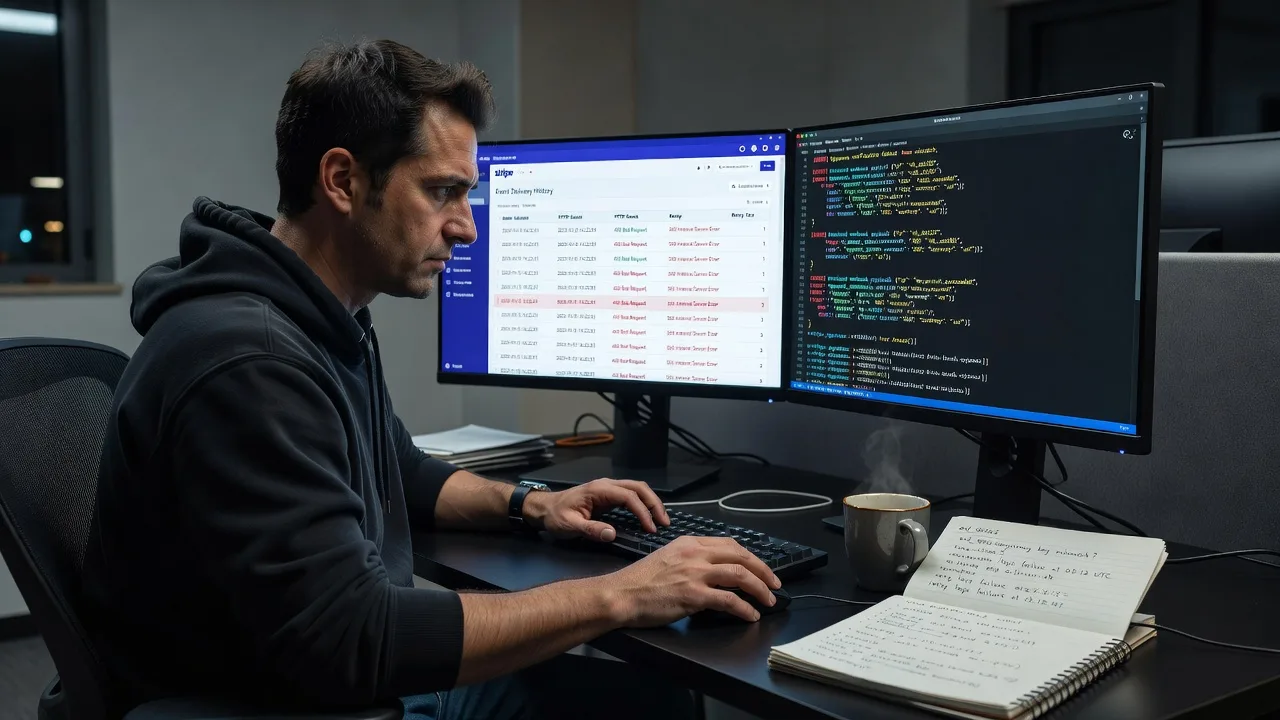
- Full webhook path audit - Endpoint URL, HTTPS cert chain, TLS version, and provider dashboard delivery history reviewed side by side with your server logs.
- Signature & secret validation - Stripe signing secrets and PayPal webhook IDs checked against what your code actually verifies, including rotated keys still referenced in staging.
- Idempotency and ordering fix - Duplicate charge.succeeded / PAYMENT.CAPTURE.COMPLETED handling hardened so retries never double-credit accounts.
- Replay & dead-letter recovery - Safe re-delivery plan for missed events without corrupting invoice state.
- Listener code review - Framework-specific checks (Node, Laravel, Django, Rails, or custom) for race conditions on concurrent events.
- Plain-English handoff report - What broke, what we changed, and monitoring alerts you can keep.
Serving Remote & surrounds
This service exists for distributed product teams—especially subscription SaaS, online education platforms, and multi-currency ecommerce—where payment webhooks cross regions and time zones. Month-end billing spikes, Black Friday surges, and quarterly plan migrations are when desync shows up as “paid in Stripe but free in the app.” We work fully remote worldwide; on-site pairing is available where practical for your ops or compliance needs.
- SaaS founders seeing trial-to-paid conversions land in Stripe but not unlock features
- Course and membership operators after a price-change wave that left half the cohort on old entitlements
- Remote-first teams needing async handoff across AU/US/EU business hours without on-call chaos
How We Work
- Step 1: Reach Out - Share provider (Stripe, PayPal, or both), stack, recent failed event IDs, and whether live charges are affected. We listen first and do not rush into code changes.
- Step 2: Tailored Plan - Fixed-scope quote for tech diagnosis and remediation; clear path if your team also needs patient walkthrough of dashboard settings.
- Step 3: We Deliver - Remote secure access or guided screen share; we instrument logs, fix the listener, and verify with controlled test events.
- Step 4: Confirm & Follow-up - You get a written root-cause summary, optional monitoring hooks, and a short follow-up window if residual events surface.
Common Issues & How to Fix Them
These are patterns we see repeatedly on production payment stacks—not generic “check your internet” advice.
Webhook succeeds in Stripe/PayPal but your app never updates the customer
Usually the provider got a 2xx from a load balancer or health path while the real handler crashed after the response, or your worker queue dropped the job.
- Step 1: In the provider dashboard open the event, note HTTP status, response body, and retry count; compare timestamps to your app access and error logs for the same second.
- Step 2: Confirm the public URL hits the same process that runs business logic (not only a reverse-proxy 200). Temporarily log raw body length and event type at the first line of the handler.
- Step 3: Send a test event; you should see one matching log line, one DB write, and a single successful delivery with no silent 2xx-then-exception pattern.
Duplicate entitlements or double invoice marks after automatic retries
Providers retry on timeouts. If you key uniqueness only on customer_id instead of event.id (Stripe) or transmission/event id (PayPal), every retry re-applies the side effect.
- Step 1: Query your payments or webhook_events table for the same provider event id appearing more than once; list side effects tied to those rows.
- Step 2: Introduce a unique constraint or cache lock on provider_event_id before any credit, email, or plan change; acknowledge the webhook only after the lock is acquired or a prior success is found.
- Step 3: Replay the same event twice from the dashboard; the second delivery must no-op with a logged “already processed” path and unchanged balances.
Signature verification fails after secret rotation or environment mix-up
Staging secrets in production, old Stripe endpoint secrets still in env files, or PayPal webhook ID bound to the wrong app credentials produce intermittent 401/400 and growing undelivered queues—especially after a deploy.
- Step 1: List every signing secret / webhook ID in Stripe or PayPal for live vs test mode; compare character-for-character to runtime env (not only.env.example).
- Step 2: Verify the raw request body is used for HMAC (not a re-serialized JSON object). Disable body parsers that alter whitespace before the verify step.
- Step 3: Trigger a signed test event; verification should pass, and a deliberately wrong secret should fail closed with a clear metric—not a generic 500.
When DIY is not enough (urgent, unsafe, recurring, or burning time), book Fixwebnode for direct professional support—no freelancers, bidding, or marketplace noise.
Why Choose Fixwebnode
We are a direct provider: enterprise-grade payment-integration debugging paired with clear, jargon-light explanations for founders and ops leads. You work with us—not a bid board—so context stays continuous from first log line to final monitor.
- ✓ Hands-on experience with Stripe Event destinations, Connect, billing portals, and PayPal REST webhooks in live multi-region apps
- ✓ Fixed-scope packages with written root-cause notes, not open-ended hourly surprises
- ✓ Remote-first delivery worldwide plus practical on-site options when your compliance or hardware setup needs it
Tools & Technologies
Stripe CLI and Dashboard event logs, PayPal Developer webhooks simulator, ngrok or Cloudflare Tunnel for isolated repro, Wireshark/tcpdump only when TLS termination is in doubt, application logs (JSON structured), Redis/DB unique constraints for idempotency, Sentry/Datadog/CloudWatch metrics on handler latency and verify failures, Node/Express, Laravel cash ier hooks, Django, Rails, and custom Go/Python listeners. We document exact commands used so your team can re-run checks later.
Perfect For
Subscription SaaS, online course platforms, digital product shops, and small finance-ops teams who process Stripe or PayPal at scale and cannot tolerate “customer paid, account still locked.” Ideal when your engineers are deep in product work and need a specialist to restore webhook truth quickly, with patient explanation for non-dev stakeholders who own billing support tickets.
Ready to clear the backlog of failed events? Call 0421498927 or visit fixwebnode.com.au/contact-support and we will map the next safe step together.
Choose a package
Focused remote audit of one provider endpoint with root-cause summary and safe DIY next steps.
Full desync diagnosis and remote remediation for one live stack, including idempotency hardening.
Both Stripe and PayPal paths hardened, dual-env secrets cleanup, replay recovery, and ops handoff.
FAQ
We work over secure screen share or time-boxed access you control. You keep credentials; we guide or apply agreed changes, verify with test events, and leave a written trail. On-site pairing is available where practical if your policy requires physical presence.
We prioritise read-only diagnosis first, then controlled test-mode or low-risk live test events you approve. Side-effecting replays of historical payments only happen with an explicit plan so balances and entitlements stay consistent.
Provider name, whether live or test mode is failing, a few recent event IDs, your stack (language/framework), and how entitlements are stored. Dashboard read access and temporary log visibility speed the job; we never ask you to post secrets in chat.
No. Fixwebnode delivers the work directly as your provider. You get one accountable path from intake to handoff—no bidding, escrow gimmicks, or proposal shopping.