






 Multi-Vendor & Complex SaaS Marketplaces
 Modern Headless & Jamstack Web Development
 High-End Corporate & Specialized Business Websites
 Advanced API, Checkout & Database Troubleshooting
Ransomware Server Recovery: Linux Database Restore | Remote
Recover encrypted Linux databases and crashed production servers—remote ransomware response worldwide.
We isolate infected hosts, assess MySQL/MariaDB/PostgreSQL damage, and restore clean data from verified backups or forensic salvage so your apps come back online with minimal downtime. Built for SaaS, clinics, and ops teams who cannot wait on marketplace bidding.
- Live incident triage and containment
- Database-level recovery and integrity checks
- Hardening so the same strain cannot return
Power up your support path: go to fixwebnode.com.au/contact-support or chat with us for urgent remote handoff.
About this service
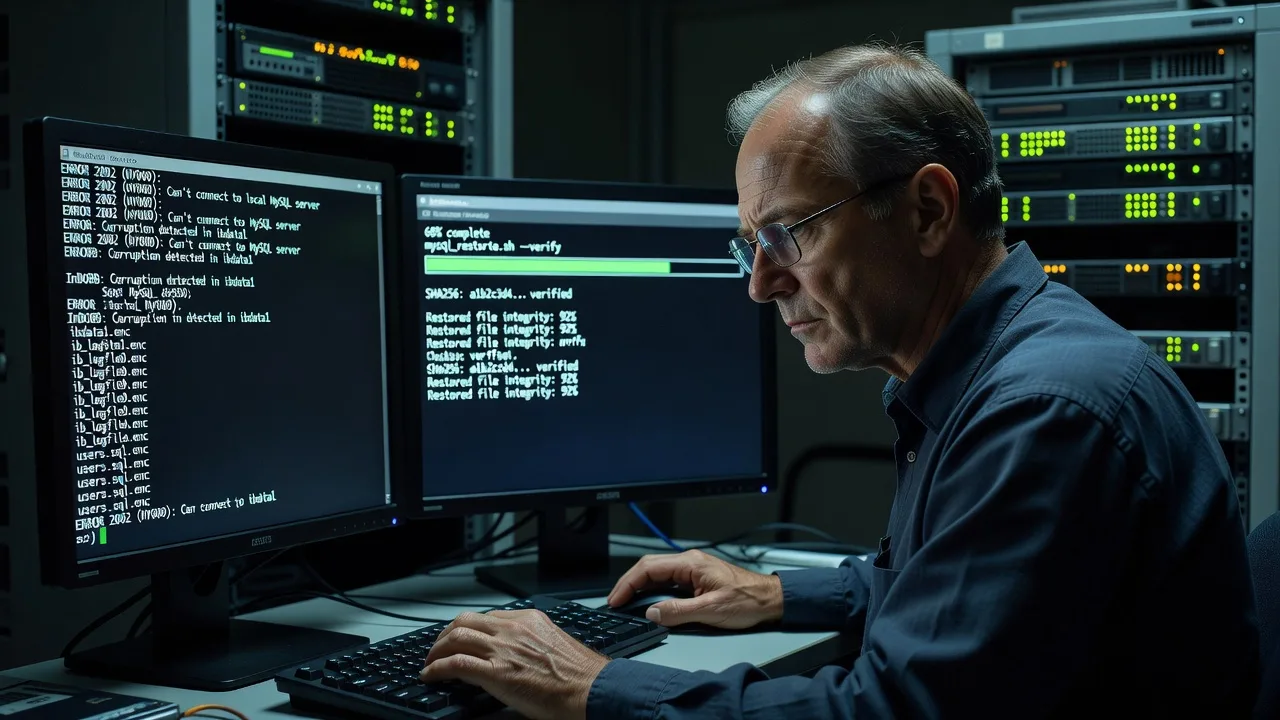
When ransomware locks your Linux database servers, we recover and restore production data remotely—fast containment, verified restore paths, and post-incident hardening for teams who need the stack back online.
What You'll Get
- Incident containment - Isolate affected hosts, kill active encryptors, and stop lateral movement before more volumes are hit.
- Database recovery plan - Assess MySQL, MariaDB, PostgreSQL, or MongoDB damage and map the safest restore route (clean backup, binary salvage, or selective table rebuild).
- Verified restore - Bring schemas and critical tables back with checksum validation, foreign-key checks, and application smoke tests.
- Forensic snapshot package - Preserve logs, ransom notes, file timelines, and IOC notes for insurers or internal review.
- Post-recovery hardening - Patch vectors, rotate credentials, lock down SSH/panel access, and schedule offline backup verification.
- Plain-English handoff - Runbooks your team can follow next time—no freelancers, bids, or escrow delays.
Serving Remote & surrounds
This service is delivered remotely worldwide for operators who run Linux databases as the backbone of revenue or care delivery. We focus on verticals where overnight encryption is catastrophic: multi-tenant SaaS, clinic EMR stacks, payment and booking platforms, and seasonal e-commerce peaks when inventory and order DBs cannot sit dark.
- SaaS and product engineering teams with shared staging/production Linux fleets and tight RTO targets
- Healthcare and allied-health providers whose patient or roster databases sit on on-prem or VPS Linux hosts
- Remote-first ops: secure SSH/VPN access, out-of-band console where available; on-site only where practical for hardware handoff
How We Work
- Step 1: Reach Out - Tell us what is encrypted, which DB engines are down, when backups last succeeded, and whether the ransom note appeared. We listen first and treat every detail as evidence.
- Step 2: Tailored Plan - Fixed-scope quote for triage, restore depth, and hardening. You get a clear path—not open-ended hourly surprises.
- Step 3: We Deliver - Remote infrastructure recovery: containment, restore, integrity checks, and service restart under change control you approve.
- Step 4: Confirm & Follow-up - Plain-English report, optional monitoring/hardening retainers, and a short debrief so your team owns the new baseline.
Common Issues & How to Fix Them
Below are patterns we see repeatedly on ransomware-hit Linux database hosts—symptoms, why they appear, and safe first moves before you escalate.
MySQL/MariaDB datadir full of.encrypted /.locked files and mysqld will not start
Encryptors often target /var/lib/mysql while the service is running, leaving ibdata,.ibd, and binlogs unreadable and the error log flooded with InnoDB tablespace open failures.
- Step 1: Do not reboot blindly. Snapshot the volume if your hypervisor allows it, then stop mysqld/mariadbd and document the ransom note path and file extensions with find /var/lib/mysql -type f | head and ls -la on the datadir.
- Step 2: Mount a known-good backup (or a pre-incident snapshot) read-only elsewhere. Prefer restoring to a clean host rather than decrypting in place. If only binary logs survived, note the last good binlog position with mysqlbinlog --start-datetime against unencrypted remnants only.
- Step 3: After restore, run CHECK TABLE / mysqlcheck --all-databases, compare row counts to monitoring baselines, and confirm the app login path before pointing traffic back.
Backups "exist" but restores fail with CRC or partial-page errors
Attackers sometimes encrypt the live datadir first, then touch NFS/S3 backup shares later the same night—so the backup job "succeeded" against already-poisoned files, or rsync copied ciphertext.
- Step 1: Inventory backup generations by timestamp and storage class. Test the oldest offline copy first (USB, immutable object lock, or air-gapped tape)—not last night’s copy alone.
- Step 2: Restore into an isolated VLAN or throwaway VM. For PostgreSQL use pg_restore -l then selective restore; for MySQL prefer logical dumps if physical InnoDB files fail page checksums.
- Step 3: Validate with application-level queries and hash spot-checks on critical tables. If every generation fails integrity, stop DIY decrypt attempts and escalate—continued writes destroy forensic options.
Only some schemas open; InnoDB undo/redo or PostgreSQL WAL looks half-written after crash during encryption
Partial encryption plus a forced power cycle leaves the engine thinking crash recovery will fix it—while ciphertext pages make recovery hang or abort at LSN mismatches.
- Step 1: Capture error.log / PostgreSQL logs and note exact LSN or tablespace IDs failing. Disable auto-restart loops that keep replaying bad recovery.
- Step 2: On a clone only, attempt controlled recovery flags your engine documents (never on the sole copy). Prefer point-in-time restore from pre-incident base backup + clean WAL/binlog shipping if you have it.
- Step 3: Confirm with SHOW ENGINE INNODB STATUS or pg_stat_activity equivalents, run consistency queries, and measure query latency against pre-incident SLOs before declaring green.
When DIY is not enough (urgent, unsafe, recurring, or burning time), book Fixwebnode for direct professional support—no freelancers, bidding, or marketplace noise.
Why Choose Fixwebnode
We are a direct provider: senior Linux and database recovery hands on your incident, not a bid board. You get infrastructure authority with clear communication so non-technical stakeholders understand RTO, risk, and what was actually restored.
- ✓ Hands-on ransomware and crash recovery across MySQL, MariaDB, PostgreSQL, and mixed LAMP/LEMP fleets
- ✓ Remote worldwide delivery with disciplined change control and evidence-preserving workflow
- ✓ Fixed package scopes so finance knows the recovery envelope before we dig deeper
Tools & Technologies
SSH and out-of-band consoles, LVM/ZFS/Btrfs snapshots, rsync and restic/borg verification, mysqlbinlog and xtrabackup/mariabackup, pg_basebackup and WAL shipping, journalctl and auditd timelines, fail2ban/ssh key rotation, ufw/nftables, ClamAV/YARA IOC sweeps where appropriate, Prometheus/node_exporter baselines for post-restore latency and IOPS comparison, and immutable object-storage backup checks.
Perfect For
Product and ops leads at SaaS firms, clinic IT contacts running Linux EMR or booking databases, and e-commerce operators facing peak-season ransomware on VPS or bare-metal Linux. If downtime is measured in lost orders or cancelled appointments and you need a direct recovery team—not a marketplace thread—this is built for you.
Ready when you are: start at fixwebnode.com.au/contact-support or chat with us for remote triage.
Choose a package
Remote triage, containment guidance, and integrity assessment for one Linux host with a single database engine.
Full remote recovery of one production Linux database server including verified restore and baseline hardening.
Multi-host or multi-DB ransomware recovery with forensic package, HA cutover support, and 30-day post-incident hardening follow-up.
FAQ
Primary delivery is remote worldwide over secure SSH, VPN, or vendor console so we can start the same day. Where hardware handoff, locked datacentre cages, or air-gapped media make sense, on-site can be arranged when practical—otherwise we coordinate with your local hands while we drive the recovery plan.
We never recommend paying as a first step and we do not run untrusted decryptors on your only copy. We preserve evidence, test offline backups on isolated systems, and restore from known-good generations whenever possible. If a reputable free decryptor later applies, that decision is yours after clean copies exist.
We routinely recover MySQL, MariaDB, PostgreSQL, and common document stores on Debian, Ubuntu, RHEL/Alma/Rocky, and similar. Shared hosting panels, bare metal, and major cloud VPS are fine as long as we can get controlled privileged access and snapshot capability.
After you reach us via fixwebnode.com.au/contact-support or chat, we prioritise active encryption and down production databases. Basic triage often begins within the agreed response window once credentials and a brief incident timeline are shared.