





 Multi-Vendor & Complex SaaS Marketplaces
 Modern Headless & Jamstack Web Development
 High-End Corporate & Specialized Business Websites
 Advanced API, Checkout & Database Troubleshooting
Exact Replacement Part Sourcing & Repair Guide Consult Melbourne
Pinpoint the right replacement part and a clear repair path for Melbourne devices and gear—without costly trial-and-error orders.
We match OEM and compatible parts from photos, labels, and fault notes, then hand you a plain-English repair sequence suited to CBD offices, warehouse benches, and home workshops across metro Melbourne. Direct Fixwebnode support—no bidding queues.
Power up your next fix: call 0421498927 or book at fixwebnode.com.au/contact-support.
- Exact part ID & cross-reference
- Step-by-step repair guide
- Remote photo/video consult
About this service
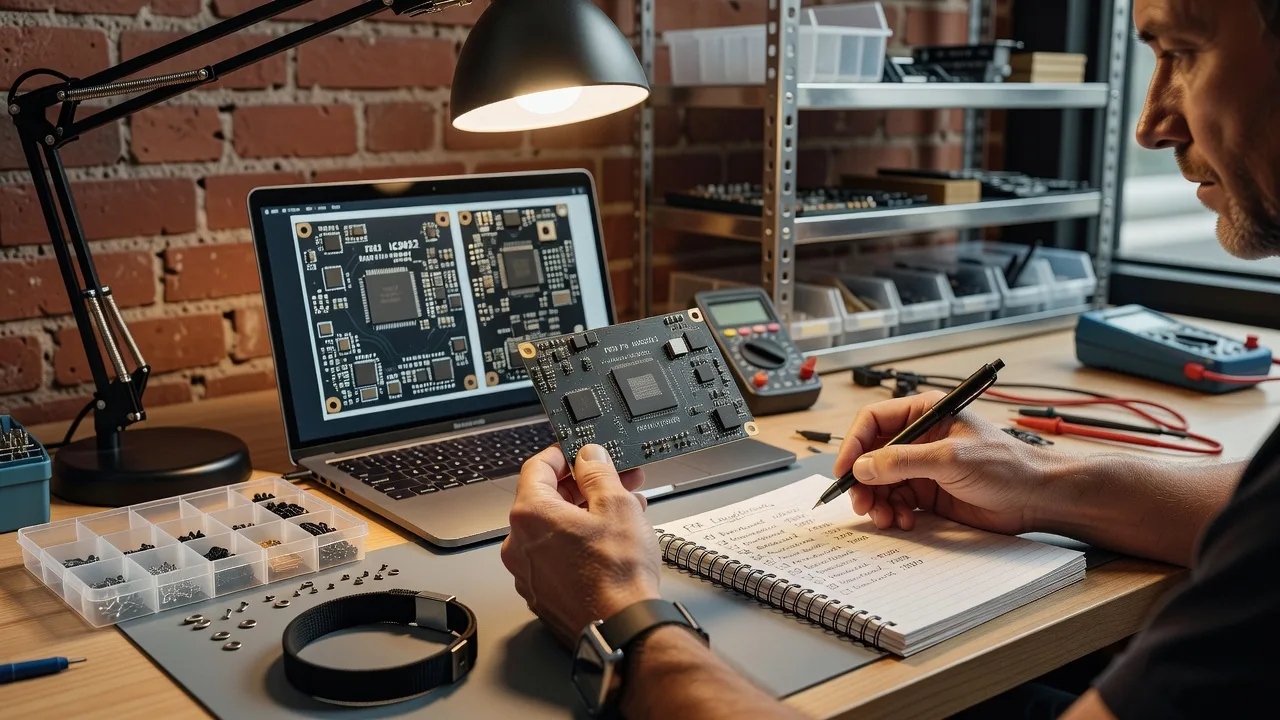
Stop guessing SKUs and dead-end repairs—get exact replacement part sourcing plus a practical repair guide consult built for Melbourne homes, clinics, and small-business benches. We identify the correct component, flag compatibility traps, and walk you through a safe fix path in plain language.
What You'll Get
- Exact part identification - Model, revision, and cross-reference matched from labels, photos, and error symptoms so you order once.
- Sourcing shortlist - OEM and reputable compatible options with fit notes, lead-time cues, and what to avoid.
- Written repair guide - Numbered disassembly, install, and test steps sized to your skill level and tools on hand.
- Risk & safety checklist - Power isolation, ESD, fastener maps, and when to stop DIY.
- Photo/video review session - Live or async review of the fault board, socket, or module before you buy.
- Post-install verification plan - Pass/fail checks and rollback steps if the unit still misbehaves.
Serving Melbourne & surrounds
Melbourne’s mix of dense CBD fit-outs, café-strip POS gear, strata apartments with limited bench space, and outer industrial service bays means part mistakes cost time and freight twice. We tailor sourcing advice to how you actually work on-site—tight plant rooms, shared workshops, or a kitchen table in suburbs such as Melbourne—and keep guidance remote-first so you are not waiting on a truck for a five-minute ID.
- High-street retailers and hospitality sites needing same-week board, PSU, or display module matches during busy service windows
- Warehouse and light-industrial precincts where conveyor, printer, and controller spares must match revision codes, not just “looks similar”
- Remote photo consults for metro Melbourne access limits (loading docks, after-hours strata entry, school-zone daytime constraints) with optional staged on-site only when agreed
How We Work
- Step 1: Reach Out - You send device make/model, serial or board markings, fault symptoms, and clear photos; we listen first and clarify safety limits.
- Step 2: Tailored Plan - Fixed-scope quote for part ID, sourcing shortlist, and repair-guide depth (tech path) or patient walkthrough support if you need slower digital coaching.
- Step 3: We Deliver - Direct consult from our team: confirmed part options, order cautions, and a numbered repair sequence you can follow on your bench.
- Step 4: Confirm & Follow-up - Plain-English handoff, verification checklist, and optional follow-up if the first part or step does not resolve the fault.
Common Issues & How to Fix Them
Use these specialist checks before you spend on another “compatible” part—each issue below is one we see repeatedly on Melbourne benches.
Board or module ordered by chassis model only—still dead after install
Many chassis share a shell across hardware revisions; the silkscreen or sticker SKU on the PCB is the real match, not the retail box name.
- Step 1: Power down, unplug, and photograph every label on the failed board edges plus any QR/2D codes under shields.
- Step 2: Compare full part number + revision (e.g. -A2 vs -B1) against the listing; reject sellers who only list the outer device model.
- Step 3: After install, confirm the same self-test LEDs or POST beeps as a known-good unit of that revision—not just “powers on.”
Aftermarket power supply fits the plug but shuts down under load
Voltage may match while current rating, pin sense lines, or PFC behaviour differ—common on compact office PCs and POS bases.
- Step 1: Note original label volts, amps on each rail, and any ID/sense pin count; do not rely on barrel size alone.
- Step 2: Choose a supply meeting or exceeding each rail’s amp rating and matching connector pinout; avoid no-name units missing sense wires.
- Step 3: Boot under normal workload (display + peripherals attached) for 10–15 minutes; if it browns out only then, the supply is underspec—not the mainboard.
Device works briefly after DIY repair then faults return within days
Often a secondary stress part (caps, thermal interface, flex cable strain) was left untouched while only the “obvious” module was swapped.
- Step 1: Log exact failure timing (cold boot, after heat, after movement) and re-inspect connectors you reseated for fretting or cracked solder.
- Step 2: Re-seat with correct torque/order, renew dried thermal pads where heat was high, and secure cables against hinge or drawer pinch points.
- Step 3: Run a heat-and-load cycle that mirrors your site (e.g. continuous print job or multi-monitor day); if the old symptom returns on the same schedule, escalate before ordering a third primary part.
When DIY is not enough (urgent, unsafe, recurring, or burning time), book Fixwebnode for direct professional support—no freelancers, bidding, or marketplace noise.
Expert Insights
On Melbourne CBD and Melbourne-style fit-outs we repeatedly see “compatible” laptop and mini-PC motherboards fail ID because facilities teams order from the asset tag (lease model) rather than the board’s service part number under the RAM shield. After five-plus years of these callouts, our rule is: never approve a board purchase until three photo planes exist—full board, close-up of the long service P/N, and the BIOS/EC sticker if present—then cross-check against the vendor’s FRU list, not marketplace titles. For metrics, track first-time-fix (FTF) rate on parts: healthy benches sit above ~90% FTF; if you are below ~70%, your process is matching cosmetics, not revisions. Transformation method we use with small ops teams: (1) freeze ad-hoc buying, (2) create a one-page FRU photo standard, (3) require dual confirmation (P/N + symptom class) before any order over a set dollar threshold, (4) log failed parts with seller SKU to starve repeat bad sources. That single control usually cuts double-freight and downtime more than any generic “buy OEM only” policy.
Why Choose Fixwebnode
We are a direct provider—technical authority for accurate sourcing plus patient, jargon-free guidance when you are the one holding the screwdriver. Melbourne clients get advice shaped by real access limits, freight timing, and mixed OEM fleets, not a generic national template.
- ✓ Direct Fixwebnode consults with fixed scopes—no bid wars or anonymous sellers
- ✓ Dual-tier clarity: precise tech ID for teams, slower plain-English coaching when needed
- ✓ Local working knowledge of metro commercial pockets, strata access, and industrial spare urgency
Tools & Technologies
High-resolution photo review, OEM FRU/service manuals, parts cross-reference databases, multimeter basic checks guidance, thermal camera stills when supplied, connector pinout references, ESD-safe disassembly sequences, and structured remote screen-share or annotated image markups for live consults.
Perfect For
Melbourne small businesses, clinic and telehealth desks, education labs, NDIS or aged-care support staff helping someone maintain essential devices, and facility teams tired of wrong-part freight loops. Ideal when you need infrastructure-grade accuracy on the SKU and human-clear steps on the bench—without turning a simple repair into a multi-vendor circus.
Ready to lock the right part and a safe repair path? Call 0421498927 or continue at fixwebnode.com.au/contact-support.
Choose a package
Single-device part ID from your photos plus a concise written repair outline and safety notes.
Full sourcing shortlist, detailed step-by-step repair guide, and one remote photo or video review session.
Multi-part or multi-device consult, extended repair playbook, priority follow-up, and optional second verification session.
FAQ
Most Exact Replacement Part Sourcing and repair-guide consults for Melbourne are remote: you send photos, labels, and symptoms, and we deliver ID, shortlists, and guides directly. If a hands-on visit is genuinely required after the consult, we discuss access, timing, and scope up front—we deliver the work ourselves as Fixwebnode, not through a freelancer marketplace.
Capture the full device model label, the failed part’s silkscreen or service sticker, connector close-ups, and any error lights or codes. Note when the fault appears (cold start, under load, after movement) and what you already tried. Clear images of revision codes cut wrong-order risk more than any single description.
Yes. Send the listing you bought, the board or module photos, and the return window if known. We confirm whether it can still work with a firmware/config caveat or must be exchanged, then lock the correct FRU before you spend again. We also add verification steps so the next install is judged by real self-tests, not just power-on.