




 Multi-Vendor & Complex SaaS Marketplaces
 Modern Headless & Jamstack Web Development
 High-End Corporate & Specialized Business Websites
 Advanced API, Checkout & Database Troubleshooting
Fix Shopify Liquid Errors & Broken Theme Layouts | Remote
Restore broken Shopify Liquid and theme layouts remotely—fast, scoped, storefront-first.
We repair syntax crashes, section schema failures, and mobile layout collapse for DTC brands, subscription merchants, and multi-currency stores shipping worldwide. You get a fixed quote, clear change log, and plain-English handoff—not a ticket black hole.
Want quicker triage? Chat with us or go to fixwebnode.com.au/contact-support to power up your support path.
- Liquid, sections & JSON templates
- Grid, header & cart-drawer layout repairs
- Available remotely worldwide
About this service
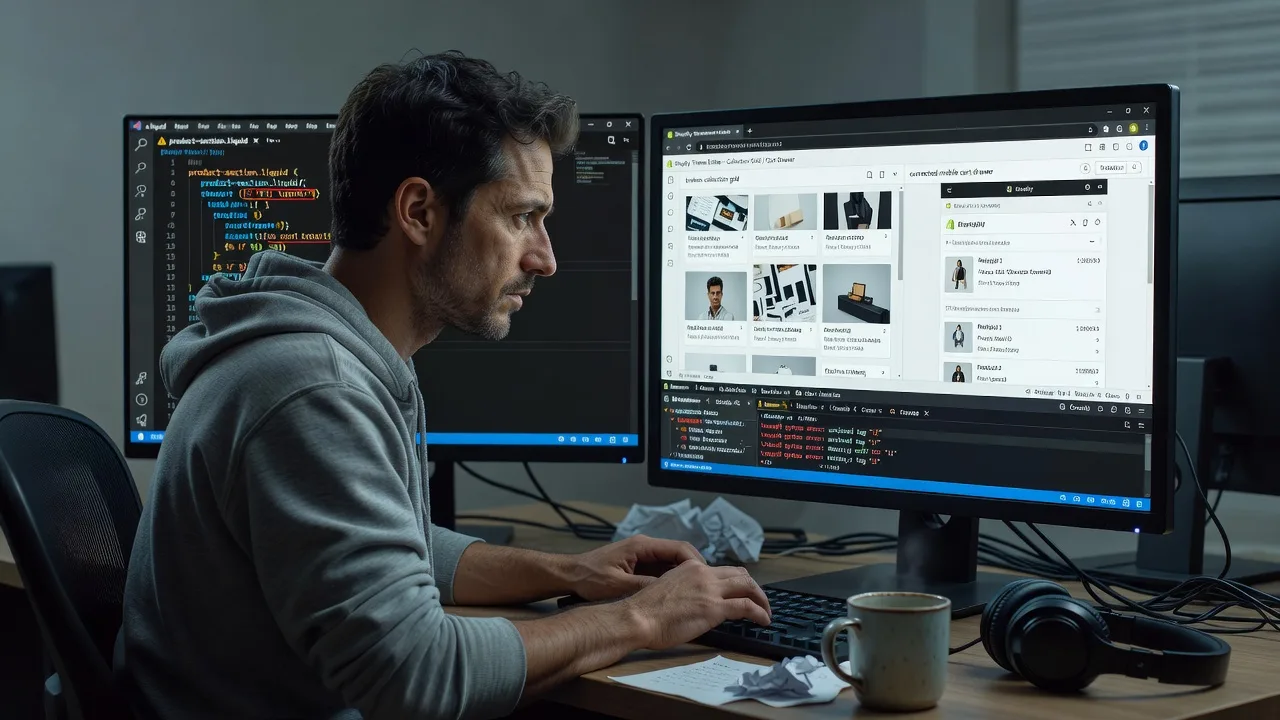
We fix Shopify Liquid code errors and broken theme layouts remotely so your storefront sells again—without risky theme resets or weekend fire drills. Ideal for DTC operators, wholesale-to-retail hybrid stores, and peak-season catalogue drops that cannot afford a blank collection grid or checkout styling that collapses on mobile.
What You'll Get
- Root-cause Liquid diagnosis - Pinpoint syntax, filter, object, and render failures before anything is overwritten.
- Theme layout restoration - Rebuild grids, section order, sticky headers, and cart drawers so desktop and mobile match your brand intent.
- Safe theme backup & duplicate workflow - Work on a duplicate theme first; publish only after visual and cart-path checks pass.
- Section & block schema repairs - Fix invalid settings, missing presets, and Online Store 2.0 JSON template breaks that lock the editor.
- App conflict isolation - Identify script and snippet collisions from apps that inject broken Liquid after updates.
- Plain-English change summary - Know exactly what broke, what we changed, and how to avoid the same regression next release.
Serving Remote & surrounds
This is a worldwide remote service aimed at Shopify merchants who sell across time zones—especially fashion, beauty, homewares, and subscription boxes preparing for launch windows, BFCM stress tests, and multi-market price lists. Delivery is remote-first with screen-share walkthroughs; on-site is available only where practical for larger catalogue ops.
- Peak-season DTC brands whose homepage hero and collection filters break after a rushed theme edit
- Wholesale-plus-retail stores needing stable B2B customer tags in Liquid without layout regressions
- Remote collab via theme duplicate, staff access, and staged publish—no marketplace middle layer
How We Work
- Step 1: Reach Out - Share the live URL, error text (or screenshot), theme name, and whether the issue started after an app install, theme update, or custom edit. We listen first and confirm access needs.
- Step 2: Tailored Plan - You receive a fixed-scope quote: single-error repair, multi-template layout restore, or deeper theme hygiene with optional follow-up support path.
- Step 3: We Deliver - We duplicate the theme, fix Liquid and CSS/layout on the copy, validate cart and mobile paths, then publish with your approval.
- Step 4: Confirm & Follow-up - Handoff in plain English, short regression checklist, and optional maintenance window before your next campaign push.
Common Issues & How to Fix Them
These are patterns we see constantly on live Shopify themes—symptoms first, then safe DIY checks before you escalate.
White screen or "Liquid error: parse" after a section save
Usually an unclosed tag, stray filter pipe, or a render call to a snippet that was renamed during a Dawn/OS 2.0 merge—felt hardest on collection and product JSON templates.
- Step 1: In Admin → Online Store → Themes, open the theme code and note the exact file named in the error (for example product.json or main-product.liquid). Do not edit live until you duplicated the theme.
- Step 2: Search that file for unmatched {% if %}/{% endif %}, broken {{ }} braces, and {% render 'old-name' %} pointing at a missing snippet. Restore the missing snippet from the previous theme version or remove the render call temporarily.
- Step 3: Save, preview the product/collection URL on the duplicate theme, and confirm the page renders with no Liquid error banner before you publish.
Collection grid collapses to a single column or uneven gaps after editing section settings
Common when merchants change columns-desktop / columns-mobile in the theme editor while a custom CSS rule still hard-codes old grid-template-columns, or when a metafield-driven badge wrapper breaks the product-card flex child.
- Step 1: Preview the collection on mobile and desktop with the theme editor; note whether the break is only on one breakpoint and whether badges or quick-add buttons are present on broken cards.
- Step 2: In the section Liquid or CSS asset, look for conflicting rules on.product-grid,.grid__item, or card wrappers—especially !important width percentages left from an old app. Align column settings in the schema with the CSS grid/flex definition (same column count logic).
- Step 3: Reload with cache bypass, add/remove a product card count of 3, 4, and 5 items, and confirm even gutters and no overflow past the container edge.
Sticky header overlaps the cart drawer or mobile menu after custom CSS
Happens when z-index stacks are edited for a promotional bar without updating drawer and menu layers—customers tap Add to cart and cannot see line items or the checkout button on iOS Safari.
- Step 1: On a phone-width preview, open the cart drawer and hamburger menu separately; note which panel sits under the header or becomes untappable.
- Step 2: Inspect theme CSS for header, announcement bar, drawer, and modal z-index values. Establish a simple stack (for example bar < header < drawer < modal) and remove duplicate position: fixed rules fighting each other on the same node.
- Step 3: Retest open/close animations, keyboard focus on the checkout button, and scroll lock on the body; publish only when both drawer and menu work with the sticky header visible.
When DIY is not enough (urgent, unsafe, recurring, or burning time), book Fixwebnode for direct professional support—no freelancers, bidding, or marketplace noise.
Why Choose Fixwebnode
We are a direct provider: one accountable team for Shopify theme surgery and calm, jargon-free explanations your ops or marketing lead can follow. Remote delivery means same-day triage windows for live storefront incidents without waiting on a bid board.
- ✓ Hands-on Liquid and Online Store 2.0 section experience across high-traffic DTC catalogues
- ✓ Duplicate-theme workflow that protects the live store while we repair
- ✓ Fixed quotes, clear scopes, and optional post-fix check before campaign launches
Tools & Technologies
Shopify Admin theme editor, Liquid, JSON templates (OS 2.0), section & block schemas, Theme Check patterns, Chrome/Safari responsive debugging, Shopify CLI for theme pull/push where appropriate, Git-friendly theme copies, CSS Grid/Flex layout repair, cart drawer and checkout branding constraints, app embed and script tag isolation, metafield-aware product cards.
Perfect For
Shopify store owners, in-house ecom managers, and small agencies who need a broken theme fixed correctly—not rebuilt from scratch. Especially suited to remote teams preparing seasonal drops, multi-currency rollouts, or wholesale tag logic where layout and Liquid must stay stable under load. If your storefront is live and revenue is blocked by a Liquid crash or mangled layout, this is built for you.
Choose a package
Diagnose and fix one Shopify Liquid or single-template layout error on a duplicate theme with publish-ready handoff.
Multi-template Liquid cleanup plus collection/product/header layout repair with mobile and cart-path verification.
Full storefront theme rescue: Liquid hygiene, section schema fixes, layout system restore, and pre-campaign regression checklist.
FAQ
We work directly on a duplicate of your theme via staff or collaborator access you control. Fixes are tested on preview links across desktop and mobile, then published only after you approve. Delivery is remote worldwide; on-site is only where practical for larger catalogue operations.
No. Standard practice is duplicate first, repair on the copy, validate cart and key templates, then publish. If you already have a broken live theme, we stabilise the critical path quickly while keeping a recoverable version.
Share the storefront URL, the exact Liquid error text or screenshots, when it started (theme update, app install, or custom edit), and which pages fail (home, collection, product, cart). That lets us scope Basic vs Standard vs Premium without guesswork.