




 Multi-Vendor & Complex SaaS Marketplaces
 Modern Headless & Jamstack Web Development
 High-End Corporate & Specialized Business Websites
 Advanced API, Checkout & Database Troubleshooting
Pharma Hack & Malicious Redirect Removal — Australia
Clear pharma hacks and malicious redirects from Australian sites—fast, thorough cleanup.
We remove injected spam, restore search safety, and lock down WordPress, Magento, and custom stacks used by clinics, pharmacies, and retailers across metro and regional Australia. Remote triage with plain-English reports so your team knows what happened and what we fixed.
Power up support: dial 0421498927 or book at fixwebnode.com.au/contact-support.
- Full malware & redirect purge
- Blacklist & Search Console recovery help
- Hardening so reinfection is far less likely
About this service
We remove pharma hacks, sneaky JavaScript redirects, and SEO spam from Australian business websites so customers land on your real pages—not fake pharmacies or malware droppers. Ideal for clinic sites, online retailers, and agencies who need a direct specialist, not a ticket queue.
What You'll Get
- Full malware & pharma-spam purge - Injected pages, hidden directories, database spam, and doorway URLs removed at file and DB level.
- Malicious redirect kill-switch -.htaccess, server configs, theme/plugin hooks, and client-side JS redirects traced and neutralised.
- Blacklist & trust recovery support - Guidance for Google Safe Browsing, Search Console, and host flags common on AU-hosted sites.
- Post-clean integrity scan - Core checksums, rogue admin users, cron jobs, and unknown scheduled tasks reviewed.
- Hardening pack - File permissions, update path, WAF/firewall basics, and backup verification so reinfection is harder.
- Plain-English incident summary - What got in, what we changed, and what your team should watch next week.
Serving Australia & surrounds
Australian clinics, compounding pharmacies, and high-street retailers often run lean CMS stacks that become targets when seasonal campaigns spike traffic. We work remotely nationwide—from CBD professional suites to warehouse e-commerce ops—and coordinate with local hosts during after-hours windows when patient booking or freight cut-offs matter.
- Medical and allied-health sites near dense appointment corridors that cannot afford days of Safe Browsing warnings
- Retail and pharmacy e-commerce around freight peaks when checkout redirects quietly siphon mobile buyers
- Fully remote delivery across Australia; optional screen-share walkthroughs for on-site staff with no travel fee for pure remote jobs
How We Work
- Step 1: Reach Out - Share the live URL, host panel access (or limited SSH/SFTP), and symptoms—odd pharmacy pages, phone redirects, or Google warnings. We listen first and confirm scope.
- Step 2: Tailored Plan - Fixed quote for cleanup depth: single site, multi-site network, or agency portfolio with staging. Clear timeline in Australian business hours.
- Step 3: We Deliver - Remote forensic clean, redirect removal, database scrub, and hardening. Patient updates if non-technical staff need plain language mid-job.
- Step 4: Confirm & Follow-up - You verify key journeys (home, login, checkout). We hand over the report and optional monitoring or a follow-up scan window.
Common Issues & How to Fix Them
These are patterns we see repeatedly on Australian WordPress and mixed CMS estates—symptoms first, then safe checks you can try before calling us in.
Issue 1: Mobile-only pharmacy spam while desktop looks fine
Attackers inject user-agent or cookie checks so Googlebot and desktop browsers see clean pages while phones get fake Viagra or weight-loss doorways—common on clinic brochure sites after a neglected plugin update.
- Step 1: On your phone (not desktop), open the homepage in a private window and note any foreign pharmacy copy, odd domains, or sudden pop-ups. Compare with desktop private mode.
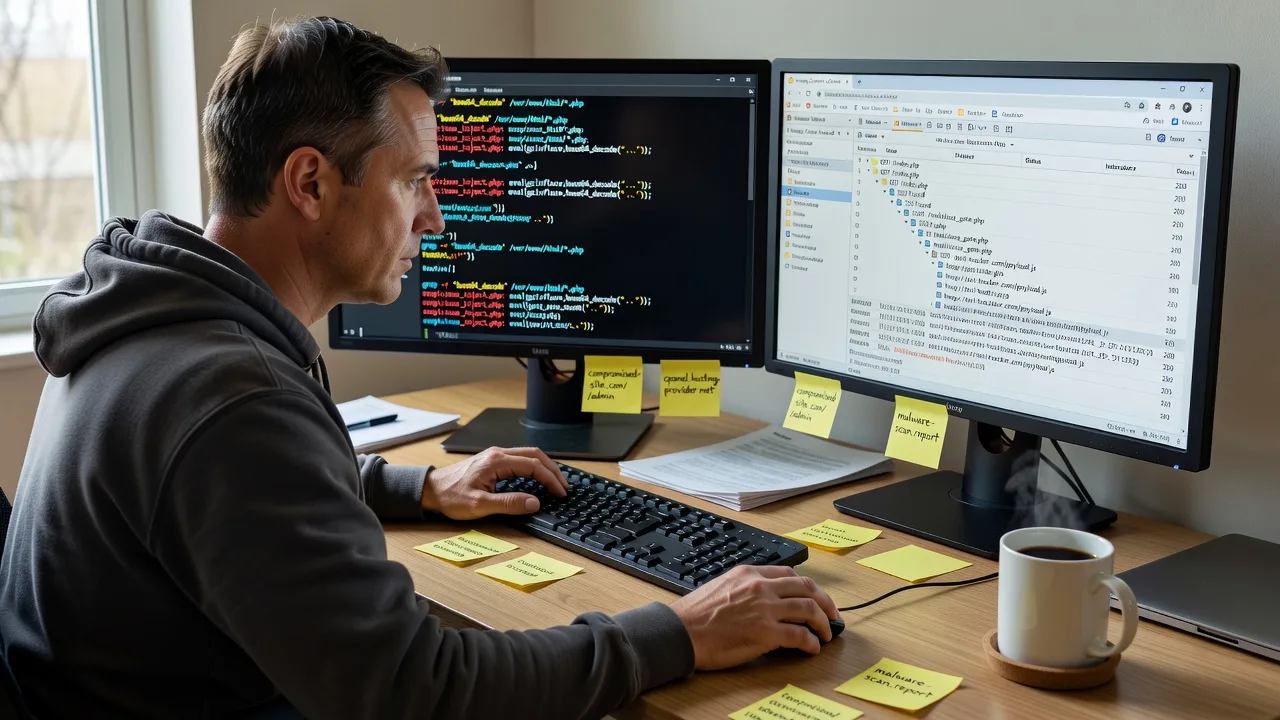
- Step 2: In hosting file manager, search themes and mu-plugins for recently modified PHP files and strings like eval(base64_decode, gzinflate, or str_rot13. Quarantine (rename) unknown drop-ins—do not delete until you have a backup.
- Step 3: Re-test mobile private mode and request a URL inspection in Search Console. If spam returns within hours, stop DIY and escalate—persistence usually means a backdoor admin or infected database option.
Issue 2: Checkout or contact form 302/JS hop to a lookalike domain
Malicious redirects often live in.htaccess RewriteRules, theme footer scripts, or a compromised tag manager container—high impact for AU retailers during sale weekends when staff are too busy to notice.
- Step 1: From a clean browser, open DevTools Network tab, load the failing page, and note the first unexpected 301/302 Location or external script domain before your brand loads.
- Step 2: Download a copy of root.htaccess and active theme header/footer templates. Comment out unfamiliar RewriteRule lines and remove script tags pointing off-site; keep a dated backup of each file first.
- Step 3: Clear CDN/cache (Cloudflare, host cache), retest the path, and confirm the Location header stays on your domain. If the hop returns after cache purge, check tag manager and server-level nginx/Apache vhost includes next.
Issue 3: Google flags “Deceptive site” after a quiet weekday
Often a mass-deface of wp-content/uploads with HTML spam plus a few infected core files—hosts in Australia sometimes suspend the account overnight, which is when reception desks notice bookings failing.
- Step 1: Pull a full backup (files + database) before changing anything. Note the exact Safe Browsing or host abuse email wording and timestamps.
- Step 2: Remove unknown HTML/PHP under uploads, reset all admin passwords, force logout of sessions, and reinstall CMS core from clean vendor packages (not from the infected tree).
- Step 3: Run a fresh malware scan, submit a Safe Browsing review only after the site stays clean for several hours, and monitor Search Console coverage for soft-404 spam URLs that still need removal requests.
Expert insight (Australia): On multi-site clinic networks we often find the “clean” marketing subdomain still sharing a single database user with write rights across all blogs—pharma injects land on the quietest site first, then fan out via shared options tables. After cleanup, split DB credentials per site and deny PHP execution under uploads at the vhost level; generic “security plugins alone” miss that pattern because the payload never touches the loud homepage until traffic is already poisoned.
When DIY is not enough (urgent, unsafe, recurring, or burning time), book Fixwebnode for direct professional support—no freelancers, bidding, or marketplace noise.
Why Choose Fixwebnode
We are a direct provider: one accountable team for remote infrastructure cleanup and clear human handoff. Australian businesses get fixed-scope quotes, after-hours friendly windows when patient or retail traffic dips, and reports your non-technical stakeholders can actually read.
- ✓ Hands-on experience with pharma spam, SEO doorway floods, and redirect webs on WordPress and custom PHP stacks
- ✓ Remote-first delivery tuned to AU host panels, business-hour SLAs, and clinic/retail uptime pressure
- ✓ Hardening and plain-English follow-up—not a one-click “scanner green” and goodbye
Tools & Technologies
SSH/SFTP, WP-CLI, clean core package restores, database diff and spam row purge,.htaccess/nginx redirect audits, PHP malware signature and behaviour review, checksum comparison against known-good cores, Google Search Console / Safe Browsing workflows, Cloudflare and host WAF rules, file integrity baselines, and staged redeploy checks. We work with common AU hosts’ control panels without requiring you to learn shell jargon.
Perfect For
Australian clinic and pharmacy sites, small e-commerce brands, strata or franchise microsites, and agencies needing a specialist cleanup partner for a client emergency. Also suited to NDIS and aged-care providers whose public booking pages must stay trustworthy for families searching on mobile. If your homepage looks fine but phones, ads, or Google say otherwise—we are built for that gap.
Ready to restore trust? Call 0421498927 or start at fixwebnode.com.au/contact-support.
Choose a package
Single-site pharma/malware scan, critical file purge, and redirect check with short incident notes.
FAQ
We deliver remotely nationwide across Australia. Most cleanups need secure host, SFTP, or SSH access rather than an on-site visit. If your team prefers a guided screen-share during business hours—including metro clinic staff or regional retailers—we schedule that in Australian timezones at no extra travel cost for pure remote work.
Cleanup is required first; warnings clear only after the site stays clean and you request a review. We remove the payload, help you verify key URLs, and guide the Search Console or Safe Browsing review steps. Timelines depend on Google’s re-crawl, not on a single button we can press.
Typically hosting panel or SFTP/SSH, CMS admin (WordPress or equivalent), and DNS/CDN access if redirects are edge-level. We use least-privilege accounts where possible, document every change, and you can revoke access when the job closes.
Yes. Standard and Premium scopes include permissions, update hygiene, upload PHP execution blocks where supported, rogue user review, and practical WAF/CDN tips. No setup is unhackable, but closing the usual pharma-hack doors dramatically cuts repeat infections.