






 Multi-Vendor & Complex SaaS Marketplaces
 Modern Headless & Jamstack Web Development
 High-End Corporate & Specialized Business Websites
 Advanced API, Checkout & Database Troubleshooting
Ansible Playbooks for Mass Ubuntu Server Patching & Config
Custom Ansible playbooks that safely patch and harden mass Ubuntu server fleets—remote, repeatable, downtime-aware.
We design inventory-driven roles for unattended upgrades, config drift fixes, and reboot windows so multi-host estates stay consistent without weekend fire drills. Ideal when one missed kernel or hold-back package can stall a whole rack.
Power up your support path: fixwebnode.com.au/contact-support — or chat with us for a fixed-scope quote.
- Idempotent patch & config playbooks
- Staged rollouts with health checks
- Direct delivery—no marketplace bidding

About this service
We build production-grade Ansible automation so your mass Ubuntu server estate patches, reboots, and reconfigures in controlled waves—not ad-hoc SSH sessions that miss hosts at 2 a.m.
What You'll Get
- Custom patch playbooks - apt/unattended-upgrades logic with hold lists, reboot flags, and per-group serial batches tailored to your fleet.
- Configuration roles - sysctl, SSH hardening, logging, NTP/chrony, and baseline packages kept idempotent across LTS releases.
- Inventory & group vars design - static or dynamic inventory patterns so prod, staging, and edge nodes never share the wrong secrets or schedules.
- Pre/post health checks - service status, disk, load, and HTTP probes before marking a host done.
- Runbook & handoff docs - plain-English how to re-run, dry-run, and roll back without guessing tags.
- Optional CI hook - lint + syntax checks so playbooks fail in pipeline before they fail on live boxes.
Serving Mass Ubuntu Server & surrounds
This page exists for operators running mass Ubuntu server fleets—warehouse-style rack rows, multi-tenant app hosts, and always-on API nodes where a single uncoordinated apt upgrade can cascade into cascading 502s. We focus on remote delivery for bulk Ubuntu estates (including mixed 20.04/22.04/24.04 LTS), not one-off desktop tweaks.
- Industrial and logistics-style batches: overnight freight windows where reboot slots are short and must finish before morning cut-off.
- High-density app clusters: CBD-style always-on web tiers that need serial=1 or percentage-based rolling with automatic abort on probe failure.
- Fully remote engagement: secure access via bastion/VPN or jump host; no on-site travel required for standard mass Ubuntu server automation work.
How We Work
- Step 1: Reach Out - Share OS versions, host counts, change windows, and pain points (failed unattended-upgrades, config drift, reboot debt). We listen before writing a single task.
- Step 2: Tailored Plan - Fixed-scope quote: which roles, inventory model, safety gates, and delivery days—clear tech path, not open-ended hourly guesswork.
- Step 3: We Deliver - We author, lint, dry-run, and execute staged playbooks against agreed groups; you get working automation plus notes in plain English.
- Step 4: Confirm & Follow-up - Verify sample hosts, hand over re-run commands, and optional maintenance for new packages or release upgrades.
Common Issues & How to Fix Them
These are the failure modes we see repeatedly on mass Ubuntu server fleets—symptoms first, then safe DIY checks before you burn a change window.
Partial fleet patched: some hosts still on old kernels after “successful” runs
Often caused by needrestart/pending reboot flags ignored, or apt holds and different sources.list per host so the playbook reported changed=0 while security packages never applied.
- Step 1: On a sample host run uname -r and cat /var/run/reboot-required (if present); compare against a known-good peer in the same inventory group.
- Step 2: Run apt-mark showhold and apt-cache policy linux-image-generic; clear unintended holds and ensure the playbook uses update_cache plus a deliberate reboot task gated by reboot-required—not a blanket reboot every run.
- Step 3: Re-run with --check then a live serial batch; confirm matching kernel and absence of reboot-required across the group before closing the ticket.
Playbook hangs or times out on apt lock (dpkg frontend lock)
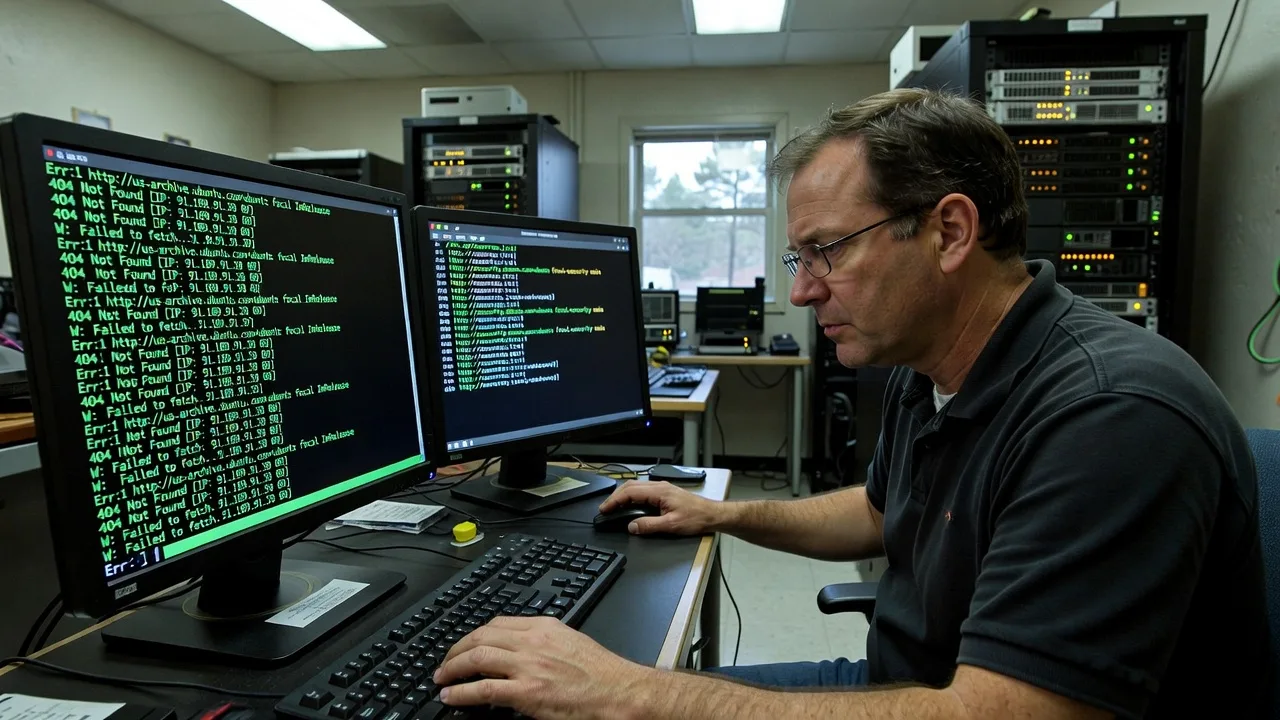
Unattended-upgrades, landscape, or a stuck cron job holds /var/lib/dpkg/lock-frontend so Ansible’s apt module waits until the job times out—classic mass-Ubuntu Monday morning symptom after weekend auto-updates.
- Step 1: Check ps aux | egrep 'apt|dpkg|unattended' and lsof /var/lib/dpkg/lock-frontend on the stuck host; do not kill blindly if dpkg is mid-configure.
- Step 2: If idle lock leftovers remain after a crashed process, use the documented recovery path (wait for lock release, then dpkg --configure -a only when safe); schedule Ansible outside unattended-upgrades windows or stop the timer for the change slot.
- Step 3: Re-run the play with a longer apt timeout and a pre-task that fails fast if the lock is held—verify zero lock errors in the recap.
Config drift returns overnight: SSH/sysctl “fixed” then overwritten
Hand edits, cloud-init, or a second config management path re-apply defaults after your one-shot playbook; mass Ubuntu server images often re-merge sshd_config.d fragments on reboot.
- Step 1: Diff live files against role templates (sshd -T for effective SSH, sysctl -a for kernel params) and list drop-in directories under /etc/ssh/sshd_config.d and /etc/sysctl.d.
- Step 2: Move settings into idempotent templates/handlers (reload ssh, apply sysctl) and disable competing writers or pin cloud-init modules that stomp the same keys.
- Step 3: Run the role twice; second run must show changed=0. Reboot one canary and re-check effective config so drift cannot hide until the next incident.
When DIY is not enough (urgent, unsafe, recurring, or burning time), book Fixwebnode for direct professional support—no freelancers, bidding, or marketplace noise.
Why Choose Fixwebnode
We deliver Ansible as a direct infrastructure service: playbooks written for your mass Ubuntu server topology, change windows, and risk tolerance—not generic galaxy dumps left for you to debug. You work with the same specialist path from inventory design through first production wave.
- ✓ Deep Ubuntu LTS + Ansible operational experience (locks, reboot debt, rolling serial strategy)
- ✓ Fixed-scope packages with measurable deliverables and dry-run safety
- ✓ Remote-first delivery suited to distributed mass Ubuntu server estates
Tools & Technologies
Ansible / ansible-core, ansible-lint, YAML inventories & group_vars, apt & unattended-upgrades, needrestart, systemd handlers, SSH jump/bastion patterns, rsyslog/journald baselines, chrony, UFW/nftables as agreed, Git-based playbook repos, optional AWX/Semaphore or simple cron/CI runners, health checks via uri/service/shell probes.
Perfect For
Ops leads, MSPs, and growing product teams running dozens to hundreds of Ubuntu servers who need repeatable mass patching and baseline config without hiring a standing DevOps bench. Especially strong fit when release freezes, freight-season cut-offs, or clinic/business uptime SLAs leave no room for manual SSH roulette. Remote engagement keeps the work on your schedule.
Ready to stabilise the next patch window? Contact support at fixwebnode.com.au/contact-support or chat with us to lock a Basic, Standard, or Premium scope.
Choose a package
Single-purpose Ansible playbook for mass Ubuntu apt patching on one inventory group with dry-run guidance.
Patch plus baseline config roles with rolling serial strategy, health checks, and handoff runbook for multi-group fleets.
Full mass Ubuntu server automation package: multi-environment inventory, reboot windows, CI lint hook, and staged production support.
FAQ
Almost all mass Ubuntu server Ansible work is remote. We connect via your bastion, VPN, or approved jump host, develop against non-prod first, then run staged waves in your change window. On-site is rarely needed unless your security policy blocks all external access—we will say so up front after the access review.
We regularly target Ubuntu 20.04, 22.04, and 24.04 LTS across small multi-host groups through larger estates. Scope is set by inventory complexity, reboot constraints, and whether config hardening is included—not by vague hourly buckets. Tell us version mix and approximate host count when you enquire.
No. Production-safe designs key reboots off reboot-required (or explicit kernel package changes) and respect serial batches so a bad canary aborts the wave. You approve the reboot policy before any live Premium or Standard production run.
Galaxy roles are starting points; mass Ubuntu fleets fail on locks, holds, mixed LTS, cloud-init drift, and change windows. We wire inventory, safety gates, and your real package policy so the second run is truly idempotent and operators can re-run without us on the call.