





 Multi-Vendor & Complex SaaS Marketplaces
 Modern Headless & Jamstack Web Development
 High-End Corporate & Specialized Business Websites
 Advanced API, Checkout & Database Troubleshooting
Fixing Slow AI Queries: The Vector Database Bottleneck
LLM replies dragging? An unindexed or hardware-starved vector store is often why. Practical checks for Australian homes and small businesses—plus when to book Fixwebnode on-site.

Is your LLM taking forever to respond? The bottleneck is likely your unindexed vector database—or the local machine struggling to serve it.
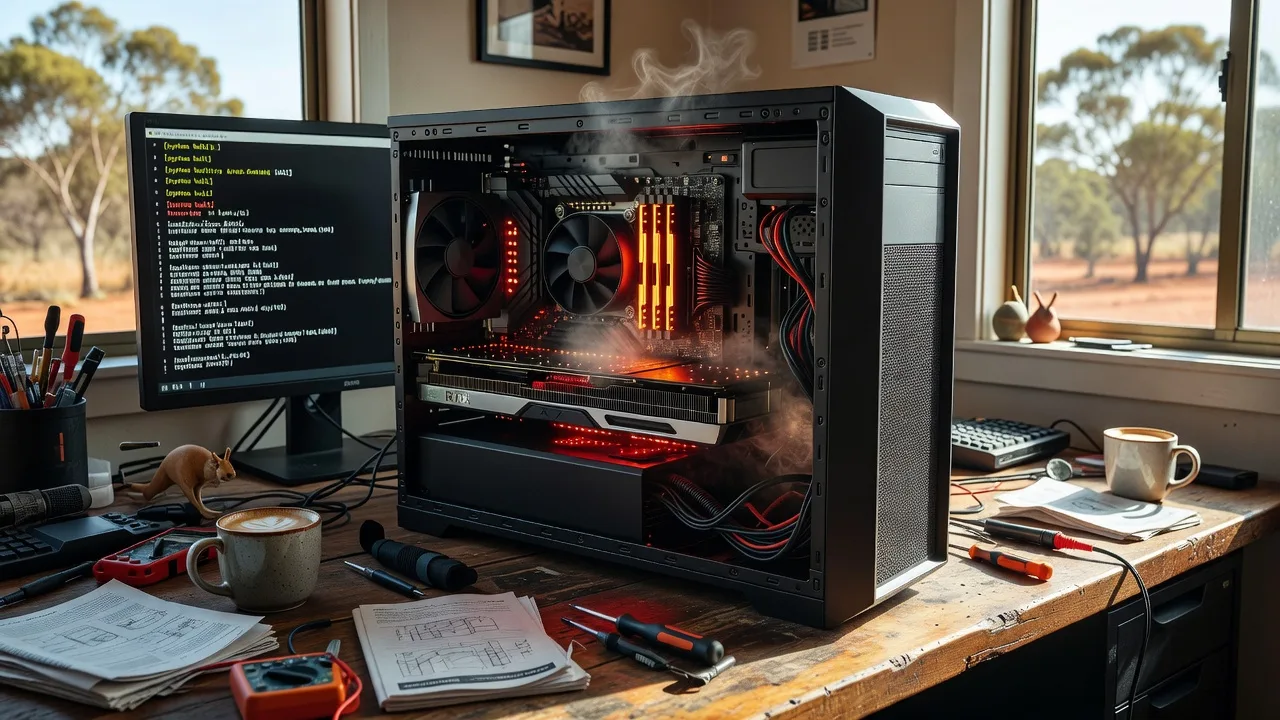
Across Australia, sole traders and small teams now run AI search, chat assistants, and document Q&A on office PCs, mini-PCs, and on-site servers. When answers crawl, people blame the model. More often the vector store is unindexed, the disk is saturated, or RAM is thrashing while embeddings load. This guide stays on that problem: how to spot a vector database bottleneck, what you can safely check yourself, and when to book a direct specialist visit with Fixwebnode for local / on-site hardware and stack diagnosis.
Why slow AI queries matter for local setups
Vector search turns text into numbers and finds “nearest” matches. Without a proper index, every question scans huge chunks of data. On modest local hardware that feels like the whole PC freezes: fans spin, the AI UI hangs, and staff wait tens of seconds for a simple answer. Fixing the vector bottleneck restores usable response times without throwing away your existing documents or hardware.
Fixwebnode works with individuals, sole traders, and local operators across Australia—on-site or drop-off style diagnosis focused on the machine and the AI stack sitting on it, not a freelance marketplace.
Why is my AI search so slow on my office computer in Australia?
Slow AI answers on a local PC or small office server usually mean the vector database is doing full scans (no usable index), the drive cannot keep up with embedding reads, or memory is exhausted so the system swaps to disk. Check free disk space, confirm an index exists for your collection, and watch whether the machine thrashing coincides with each query; if indexes will not rebuild or the drive shows health warnings, book an on-site specialist.
| Symptom | Quick check | When to call Fixwebnode |
|---|---|---|
| Every AI reply takes 20+ seconds | Confirm vector index exists; free up disk space | Index rebuild fails or PC locks hard |
| Fans roar only during AI search | Note RAM use and drive type (HDD vs SSD) | Repeated crashes or SMART / health alerts |
| Answers wrong after a model change | Re-embed with matching dimensions; rebuild index | Corrupt store or mixed collections you cannot untangle |
Common vector bottleneck issues (unique symptoms)
1. Unindexed collections (brute-force similarity every time)
Symptom: Query time grows as you add documents; CPU spikes on every question; small test sets feel fine, production feels broken.
2. Local disk I/O starvation (HDD, nearly full SSD, or failing drive)
Symptom: The whole machine stutters during AI search; Activity Monitor / Task Manager shows disk at 100%; other apps lag only when vectors load.
3. Embedding mismatch after a model or dimension change
Symptom: Search returns nonsense or empty results after switching embedding models; re-indexing never finishes; logs mention dimension errors.
4. Memory pressure and swap thrash on the workstation
Symptom: RAM pegged near 100% when the AI app opens the vector store; system becomes unresponsive; queries improve only after a full reboot.
How to fix each issue (DIY steps first)
Fix 1 — Build or rebuild the vector index
An unindexed store forces a full scan on every prompt. That is the classic “slow AI query” bottleneck.
- Open your AI / RAG app or vector admin UI and note the collection or knowledge-base name in use.
- Check whether an index status shows “none”, “building”, or “ready”. If none, start an index build for that collection (HNSW / IVF-style options if the UI offers them—use the app’s recommended default).
- Do not add large document batches while the index is building. Let one rebuild finish, then test three representative questions.
- If the UI offers “optimize” or “compact”, run it after the index completes so fragmented segments are merged.
- Retest with the same prompts before and after; you want a clear drop in wait time, not just a UI spinner change.
When to call Fixwebnode: Index jobs fail repeatedly, the app cannot see the collection, or rebuilds crash the workstation. Bring a note of the AI app name and roughly how many documents you store.
Fix 2 — Relieve local disk bottlenecks
Vector files and embedding caches are heavy. A slow or full drive turns every nearest-neighbour lookup into a stall—especially on spinning HDDs still common in older office towers.
- Check free space on the drive that holds the AI data folder. Aim to keep comfortable free headroom (many stores need temporary space while indexing).
- Identify whether data lives on an HDD or SSD (System Information / About This Mac / drive utility). If vectors sit on a mechanical drive, plan migration to an internal or reputable external SSD when practical.
- Move bulky originals (raw PDFs, video) off the vector data volume if your workflow allows; keep only what the indexer needs locally.
- Run the operating system’s disk health check (Windows: drive properties / tools; macOS: Disk Utility First Aid). Note any warnings—do not ignore failing SMART-style alerts.
- Reboot once after cleanup, reopen the AI app, and time the same three queries again.
When to call Fixwebnode: Health checks fail, the drive clicks or disappears, or you need on-site migration of the vector data folder without losing the knowledge base. For geography of visits and drop-off options, see all service areas and the Australia service area page.
Fix 3 — Repair embedding / dimension mismatches
Vectors only compare cleanly when every row shares the same embedding model and dimension. Mixing models silently destroys quality and can force expensive reprocessing that feels like a “hang”.
- Write down the embedding model name currently configured in the AI app (e.g. the model shown under settings).
- If you recently changed models, treat the old vectors as incompatible. Prefer a clean re-embed of the corpus with one model rather than mixing old and new rows.
- Delete or archive the stale collection only after you have a file backup of source documents (never delete originals you cannot replace).
- Re-import or re-sync documents, run embeddings once, then build the index (Fix 1) before testing search quality.
- Spot-check: a known document title or unique phrase should rank near the top for a matching question.
When to call Fixwebnode: You have multiple half-migrated collections, unclear which model produced which files, or re-embed jobs corrupt the store. A specialist can inventory what is on the machine and stabilise one clean pipeline.
Fix 4 — Ease RAM pressure on the local machine
Loading indexes and batch embeddings can exhaust laptop or small-server memory. The OS then swaps to disk—another vector bottleneck that looks like “the LLM is slow.”
- Before opening the AI stack, quit browsers with dozens of tabs, heavy design tools, and unused VMs.
- In Task Manager / Activity Monitor, watch memory while you run one AI query. If memory is maxed and disk activity spikes in sync, you are swapping.
- In the AI / vector app settings, lower batch size for indexing and disable “load full index into memory” style options if present and not required for your dataset size.
- Split huge knowledge bases into topic collections so everyday queries touch a smaller hot set.
- If the machine has upgradeable RAM and constantly sits at the ceiling during normal AI use, plan a hardware memory upgrade rather than living with swap thrash.
When to call Fixwebnode: The PC blue-screens or kernel-panics under AI load, memory upgrades need on-site fitting, or you cannot tell whether the limit is RAM, disk, or a damaged index file.
What to prepare for an on-site or drop-off visit
If DIY does not restore snappy answers, book a direct appointment with Fixwebnode. Helpful prep:
- The workstation, mini-PC, or small server that runs the AI / vector components (power supply and any dongles).
- A short list of example questions that feel slow, plus roughly when the slowness started (after a model change, disk fill-up, or crash).
- Backup reminder: copy critical source documents and export any knowledge-base backups the app supports before hardware work or OS repairs.
- Login notes for the local AI app only (do not email passwords; share on-site as you prefer).
Expect inspection of drive health, free space, memory headroom, and whether indexes actually exist—then a clear path to rebuild or remediate. Timing is soft-language only; early bookings are often handled the same day when diaries allow, without guaranteed travel windows.
When DIY is enough vs when to book Fixwebnode
DIY is enough when free space was critically low, an index simply had never been built, or a single embedding model switch needed a clean re-import you can finish overnight.
Book Fixwebnode when indexes will not complete, the drive reports errors, the machine locks during every query, collections look corrupted, or your business depends on the assistant and you cannot risk further DIY deletes. You deal with Fixwebnode as a direct specialist provider for this class of local performance problem—not a bid board or freelancer marketplace.
Get the vector bottleneck off your critical path
Slow AI replies rarely mean you chose the “wrong” model. They usually mean the vector layer is unindexed, the local disk cannot feed embeddings fast enough, dimensions drifted after a change, or the workstation is out of RAM. Work through the numbered checks above, time a few fixed prompts after each change, and stop if health warnings or crashes appear.
Ready to talk through your setup in Australia? Start a conversation or book via the landing page for individuals, sole traders, and local operators: https://fixwebnode.com.au/website-repair-australia. Fixwebnode will help you pin down whether the fix is an index rebuild, storage relief, or hands-on hardware attention—so your LLM answers in seconds again, not minutes.